This is such a common question — and if it’s crossed your mind, you’re very much not alone.
You come to class regularly.
You know the steps.
You’ve danced for months… maybe years.
So why does confidence still feel wobbly? Why do you sometimes feel like everyone else is progressing faster than you?
Let’s gently unpack what’s really going on.
1. Skill doesn’t grow in a straight line
One of the biggest surprises in social dance is this: confidence often lags behind ability.
Many dancers assume that after a certain amount of time, confidence should magically arrive. But in reality, it usually comes later than expected — and only after lots of real-world dancing.
Those of us who appear more relaxed or confident on the floor aren’t necessarily “better” dancers. We’ve often just:
- been dancing longer than we realise
- danced with lots of different people
- danced to many tempos, styles, and situations
- made many, many mistakes along the way
Confidence is often the by-product of experience, not a reward for getting things “right”.
2. Watching videos doesn’t replace dancing
Instagram and YouTube can be inspiring… but they can also be misleading.
Watching great dancers does not:
- give you physical connection skills
- teach your body how to respond in real time
- help you manage nerves on a crowded floor
Only social dancing does that.
Think of it like this:
You don’t learn to swim by watching swimming videos.
You learn by getting in the water.
Social dancing is the water.
3. The myth of “doing enough moves”
Many leaders, especially, fall into this trap:
“I need lots of exciting moves to be a good dancer.”
This belief creates pressure — and pressure kills confidence.
Most followers don’t want:
- endless patterns
- complicated sequences
- performance-level dancing
They want:
- a comfortable connection
- clear intention
- musicality
- a relaxed, enjoyable experience
In fact, confidence often increases the moment you stop trying to impress and start simply dancing with your partner.
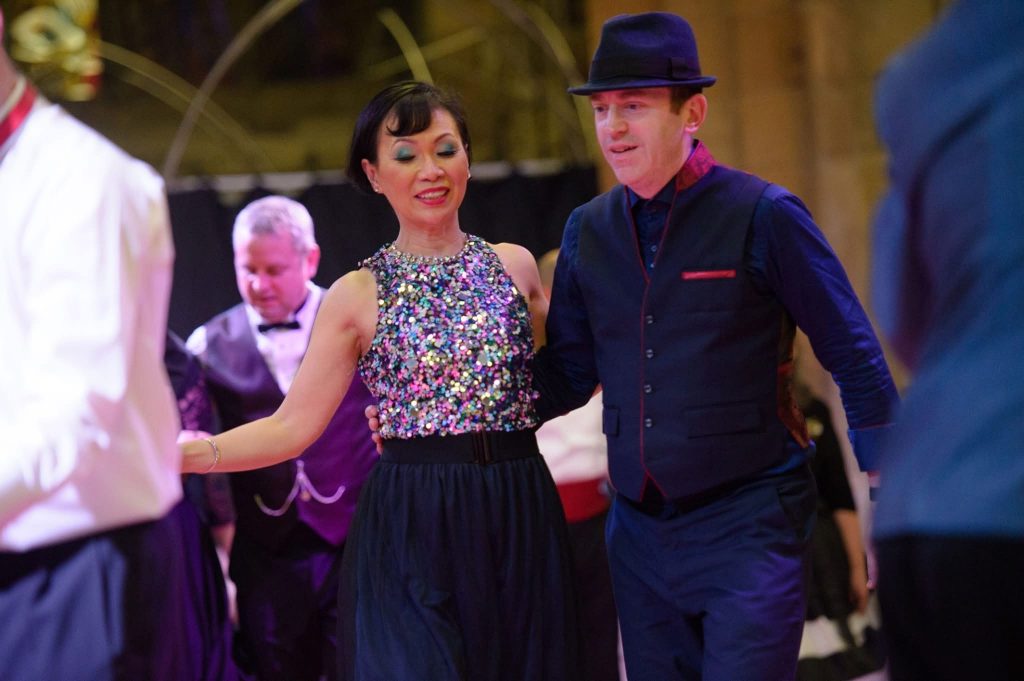
4. Confidence grows when you stop worrying about what you can’t do
Here’s what experienced dancers eventually discover:
Confidence didn’t come from having more skills —
it came from caring less about the skills I didn’t have.
You don’t need everything.
You just need enough.
Enough rhythm.
Enough awareness.
Enough connection to get through a dance with enjoyment.
When you stop mentally apologising for what’s missing, space opens up for what is there.
5. Connection beats repertoire — every time
Some of the most uncomfortable dances don’t happen because of “lack of moves”, but because of lack of connection.
Connection is a shared language.
And like any language, it takes time, repetition, and many conversations to become fluent.
You can dance beautifully with someone using very little…
and feel completely lost with someone else using a lot.
That’s normal.
That’s learning.
6. What actually helps confidence grow?
From years of dancing and teaching, a few things stand out again and again:
- Lots of social dancing (especially with different partners)
- Dancing to different speeds and styles of music
- Focusing on listening and responding, not performing
- Workshops that prioritise connection and communication
- Accepting that some dances will feel awkward — and that this is okay
Confidence isn’t built in comfort.
It’s built in experience.
A gentle question for you
Before you close this page, take a moment to reflect:
What makes you feel less confident when dancing?
- Is it physical aches or tiredness?
- Social nerves?
- Comparing yourself to others?
- Worrying about “doing it right”?
There’s no wrong answer — just useful information.
And remember:
If you’re still dancing, still showing up, still curious…
you’re doing better than you think!
Keeeeeeep dancing!