1. Why Lindy Jazz Courses Are Different

    February 18, 2025 by Joo-Lee

    Lindy Jazz Classes in Durham

    Many dance classes let you drop in and out, but that often means forgetting what you’ve learned or picking up bad habits. At Lindy Jazz, we do things differently! Our structured courses give you the support, consistency, and guidance you need to build confidence and dance with ease.

    Here’s What You Get:

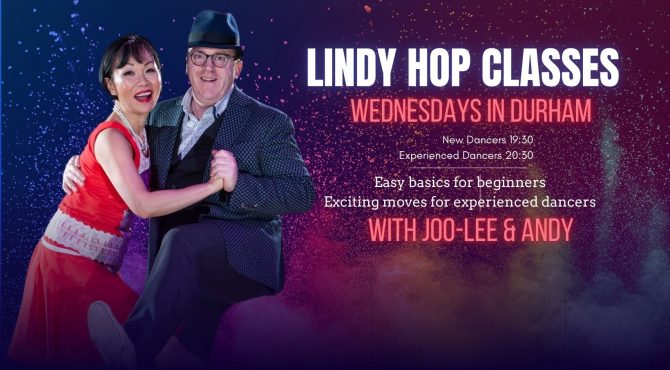
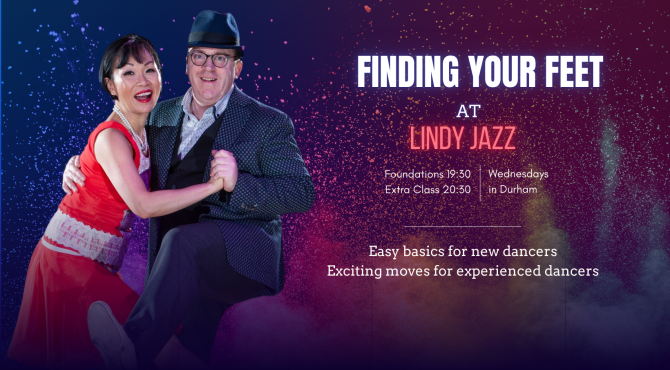
    Swing Dance Fundamentals (19:30 – 20:15) – Perfect for all levels, covering essential moves and technique.
    Extra Class (20:15 – 21:00) – For experienced dancers who want to refine their skills and add flair.
    Online lesson videos – Recap moves anytime, so you never feel lost.
    Private Whatsapp group – Ask questions, share progress, and stay connected.
    Optional video feedback – Get personalised tips to improve your dancing.

    Lindy Jazz is More Than Just an Evening Class!

    🙌 Everything is explained step by step—no stress, just fun.
    🙌 Join on your own, with a partner, or with friends—everyone is welcome!
    🙌 If you miss a class, catch up easily with our online videos.

    Ready to dance? Secure your spot now! Book Here


  2. How Do The Lindy Jazz Courses Work?

    September 30, 2023 by Joo-Lee

    We’d like to thank Vivienne, one our Lindy Jazz members for her views on how it all works!

    Is everyone in the class really good already?
    When I was a beginner, my main goal was simply to learn to swing dance to fabulous music. I wasn’t concerned about whether others were better dancers than me—I just wanted to gather the courage to go on my own. It was a personal achievement I aimed for, and thanks to Joo-Lee, Andy, and my fellow dancers, I felt incredibly welcome.

    Will I be the oldest or the slowest in the class?
    Personally, I didn’t worry about the age of my fellow dancers. When I first attended, the class had a diverse range of ages, so I never felt uncomfortable.

    How long does it take to be able to dance?
    There isn’t an exact timeframe for this. We learn foundational steps that serve as building blocks for more complex routines and moves. Personal attitude plays a role too—learning to relax, not being too critical of yourself if things don’t go perfectly, and embracing the freedom to express your own personality through dance. With Joo-Lee and Andy, there’s no pressure to get it right immediately. Dancing is an exciting, ongoing journey.

    Are the Lindy Jazz courses suitable for beginners?
    Absolutely! Lindy Jazz courses are specifically designed for beginners. The learning pace is relaxed, breaking down everything from basic steps to counting beats, rhythm, and the unique style of Lindy Jazz. Supportive videos recap the steps, and Joo-Lee and Andy are excellent, approachable teachers who are always happy to help with any dance-related questions.

    What is the Extra Class?
    Extra classes are suitable for anyone with extra time, extra energy ,extra dance experience, extra patience and want extra moves. At Lindy Jazz, there are no assessments, that’s why you won’t hear us talking about ‘levels’. It’s all about the amount of time, energy and patience you have on a Wednesday evening!

    If I can’t attend every class in the course, will I fall behind or miss out?
    Not at all! We provide recap videos via an online link that you automatically gain access to when you start the course. Additionally, there’s a Messenger group where you can watch videos or share supportive messages with other dancers. You’ll also receive emails about upcoming workshops and social events, ensuring you stay connected even if you miss a class.

    What is a Jazz Social?
    It’s your chance to: 🎷 Enjoy DJ Andy’s amazing swing playlist
    🕺 Relax, dance, practise or just soak up the atmosphere
    🌙 Every Wednesday in the summer courses 21:00-22:00
    Just £4 on the door or free if you’re a course member.

    Learn to swing dance with Lindy Jazz courses. Easy basics for beginners and exciting moves for experienced dancers.

    Sign up here to receive occasional emails from Lindy Jazz with updates and upcoming courses.


  3. One Small Step

    November 30, 2022 by Joo-Lee

    I didn’t get the chance to Swing dance when I was young. I only learned to Swing dance in my 30’s. I know that if I’d told myself then that I needed to be a natural born dancer or have dance experience before I turned up to my first Swing dance class, I wouldn’t be having so much fun Swing dancing let alone teaching Lindy Hop today.

    When you see me dance, it may look as if I have always found dancing easy. However, my ‘trade secret’ is that I make time for dancing, learning, and practising.

    The power of ‘keep going’

    40 years ago (yep! I feel old) I taught my first music lessons.

    I’d just passed my diploma & my piano teacher gave me the opportunity to cover her lessons. This changed my life!

    Suddenly, I had the opportunity to have first-hand experience of teaching, a glimpse at a career in music, and the self-belief to pursue my dream.

    The best part of all of it? I am blessed to have known wonderful students from across the globe who still keep in touch with me. I’ve been part of their musical journeys and I’ve seen them blossom, what a fantastic privilege!

    But music didn’t always come easy to me. Although I had a genuine passion for it, I got mediocre exam grades. I wasn’t considered to be ‘talented’ and was repeatedly told how much better other students were than me. This made it so hard to believe that the hard work I’d put into hours of practice would actually come to anything.

    But I kept going!  Even though at times my heart and head were saying different things. My heart said “But you want this, you want to teach music” and my head said “I am not sure if I am any good at all!”

    But I kept going!  I kept going by taking One Small Step each day. The One Small Step could be doing 5 minutes of practice or listening to the music I was studying. That One Small Step stopped me wasting time worrying about things I had no control over.

    The importance of building strong foundations

    Fast forward a few decades and I now specialise in something I never expected to! I teach advanced level music students at diploma and degree level to overcome performance anxiety by teaching them to build strong technique.

    How did that happen? Most super talented musicians who teach do not necessarily break down their technique as they already have a natural finesse. But as I had to work out the gaps in my own technique, I am now able to identify the gaps that I see over and over again in advanced level music students. Just like me, they were rushed through ‘the grades’ to pass exams at the expense of building solid foundations in their technique.

    What’s your One Small Step going to be?

    So how do you keep going when learning new dance skills feels hard?

    Keep attending class. Show up by being present, energetic, and positive.

    Ask yourself, “why do I want to learn to dance?.” Listen to your heart’s desire. Go with what you truly want and believe in and take your ‘One Small Step’ towards your dream. See what a difference it makes to your dancing and confidence.

    And if you miss a class? Don’t worry. Just log in to the Lindy Jazz course videos and you’ll catch up in no time!


  4. You Don’t Have to Be a Dancer to Start Dancing

    January 30, 2026 by Joo-Lee

    When I turned 30, which feels both like yesterday and a lifetime ago, I had one of those thoughts many people recognise.

    I really should do some exercise.

    Like a lot of people, a milestone birthday made me think about my health and wellbeing. The trouble was, I’d never found any kind of exercise I actually enjoyed. I didn’t like sport — I never understood the rules, I wasn’t competitive, and I definitely wasn’t interested in exhausting myself just for the sake of it.

    And just to be clear — I didn’t consider myself a dancer.

    Apart from a brief and fairly disappointing spell with ballet at the age of eight, dancing wasn’t something I did. I certainly wasn’t the person who got up and danced at parties. If there was dancing happening, I was usually quite happy watching from the sidelines.

    I tried the gym briefly in my late twenties, but it didn’t stick. The repetition bored me and I felt disconnected from what I was doing.

    What I did know was that I loved music.

    So I thought, why not try dancing?
    It felt like it might combine movement, music — and hopefully meeting people too.

    Discovering Lindy Hop

    I started by going along to Dance City in Newcastle, where you can try lots of different studio classes. I sampled a few styles, then discovered partner dancing — first modern jive, and shortly after, Lindy Hop.

    Not long after that, a London group called the Jiving Lindy Hoppers came to County Durham to run a week-long workshop. That week changed everything.

    I completely fell in love.

    Lindy Hop felt joyful and free. It didn’t feel formal or intimidating. It wasn’t about perfect lines or being watched. It was social, playful, and rooted in music. You danced with lots of different people, and it felt like a genuinely useful life skill — something you could do at parties, weddings, or whenever there was live music.

    Best of all, it didn’t feel like exercise at all.
    Which meant my motivation skyrocketed.

    When There Was Nowhere Local to Dance

    At the time, there wasn’t much Lindy Hop happening locally. Once that week-long workshop ended, I couldn’t find anywhere nearby to continue.

    I was a schoolteacher then, and while I enjoyed studio classes, nothing matched the spark I’d felt through Lindy Hop.

    So I started travelling.

    I went to Edinburgh and London — two or three hours away — just to dance. Along the way, I made friends who shared the same love of music and movement, and many of those friendships have lasted to this day. I still travel to Edinburgh now to dance with people I first met all those years ago.

    Eventually, in 2007, Andy and I decided to create the thing we wished had existed locally.

    Quite simply, we wanted the chance to dance with others in our own community and share this joyful dance in the North East. Andy also wanted the chance to DJ the swing music he loved — music that seems to lift you onto the dance floor before you’ve even thought about it.

    What began as a single class of around 40 people grew over time into a thriving community, including the DJam Swing Dance Festival, which welcomed around 400 dancers each year.

    How Dancing Changed Me (More Than I Expected)

    Looking back, I don’t think I realised how sociable I actually was until I started Lindy Hop. People who knew me earlier might even say I was quite shy.

    Learning this dance quietly but completely changed my social life — in the best possible way.

    Lindy Hop only works if you dance with other people, so confidence grows naturally. You’re not put on the spot. You’re not performing. You’re simply sharing a few minutes of movement and music with someone else.

    You meet kind, friendly people who love the same things you do, and over time, that changes how you see yourself.

    I still wouldn’t describe myself as someone who loves exercise.
    But I do love dancing.

    Why I Still Believe Lindy Hop Is Worth Trying

    That’s why I still believe so strongly in Lindy Hop — and why we run Lindy Jazz the way we do.

    You don’t need rhythm.
    You don’t need a partner.
    You don’t need to be “a dancer”.

    You don’t even need to feel confident.

    You just need a little curiosity and a willingness to give it a go.

    If you’ve ever thought “I should do some exercise” but nothing has ever quite felt right…
    If you love music but don’t see yourself as a dancer…
    If you’d like something sociable, joyful, and gently confidence-building…

    You don’t have to be a dancer to start dancing.

    Check out the next Lindy Jazz course here.
    If you’re curious, you’d be very welcome to join us!


  5. Notes from Last Night’s Lindy Jazz Class

    January 29, 2026 by Joo-Lee

    (aka: Things We All Do… and Can Laugh About Together)

    Last night’s class was a cracker — lots of smiles, plenty of “aha!” moments, and a few gentle reminders that are well worth sharing. So here they are, served with kindness, encouragement, and a pinch of humour.

    Followers: let’s talk about jockey position

    One little habit that sneaks in is hanging back or slowly drifting backwards when you’re in jockey position. It can feel subtle, but here’s what happens:

    If you drift back, the leader’s right arm (behind your back) starts working overtime — and not in a good way. When you stay comfortably present (not leaning, not escaping), everything suddenly feels lighter, clearer, and easier for both of you.

    Confidence: a tiny mindset shift that changes everything

    Instead of asking:

    • “Am I doing this right?”
    • “Am I good enough?”
    • “Is this wrong?”

    Try asking: “How can I make this easier for my leader?”

    Why? Because confidence isn’t about self-inspection — it’s about responsiveness.
    When you hesitate, hover, or second-guess, your body literally becomes harder to lead. When you’re present and available, the lead has something to work with.

    Eyes up, shoulders open (and yes… stop staring at the floor….)

    Looking at the floor is very tempting — we all do it. But it affects more than you think:

    • Your balance suffers
    • Your shoulders close and hunch forward
    • You feel less stable and less connected

    When you look at your partner:

    • Your shoulders naturally open
    • You feel more balanced
    • You look more confident (even if you don’t feel it yet!)

    Connection improves instantly. Magic? No. Just physics and humans.

    Leaders: you’re not failing — you’re learning

    Some leaders shared that they felt they “weren’t leading well” because they didn’t always get a response from their follower.

    So I asked a very important question:
    “And when did you qualify as a Lindy Hop assessor?” 😉

    Think about this:
    Andy and I can dance easily with all of you, our class members because we have years of experience adapting. That skill doesn’t arrive overnight. It grows slowly, through dancing with many people, many times, with curiosity and patience.

    Right now:

    • Don’t expect your partner to fully adapt to you
    • Don’t expect yourself to fully adapt to them

    That comes later. And it will come.

    The one thing that helps everyone — immediately

    Connection.
    And the simplest form of connection is… looking at each other.

    When you connect:

    • You respond better
    • You adapt more easily
    • You relax
    • You enjoy yourself more

    And remember — you are dancing with good friends, in a supportive room, where everyone is learning and cheering each other on.

    Final reminder

    You are:

    • Dancers
    • Students
    • Humans learning something new

    You are not:

    • Examiners
    • Judges
    • Qualified Lindy Hop assessors

    So please… stop marking your own homework.
    Start dancing. Start smiling. Trust the process.
    And most of all — enjoy yourselves.

    See you on the dance floor 💃🕺


  6. Helpful Habits

    October 23, 2025 by Joo-Lee

    A habit is something you do regularly and automatically — often without thinking — because you’ve repeated it many times before.
    In short: a habit is a repeated action that becomes part of your routine.

    Whether it’s brushing your teeth, checking your phone, or tapping your foot to music — habits shape how we live and learn.
    The same is true in dancing.


    Dancing Habits — Helpful or Unhelpful?

    When we come to Lindy Jazz, most of us are here for fun — to relax, enjoy the music, and meet lovely people.
    But sometimes, without realising it, we try a bit too hard.
    We overthink, analyse, and tense up in the process.
    And before we know it, those thoughts and actions become… habits.

    So let’s pause for a moment.
    Are your current habits helping you dance with more freedom — or holding you back?

    Becoming aware of your habits is the first step to dancing with more ease and joy.
    Once you spot an unhelpful habit, you can swap it for a more helpful one.


    Helpful Habits for Lessons

    1. Showing up (even on days you feel tired!)
    2. Imagining you know nothing — stay open and curious
    3. Smiling
    4. Laughing — it helps you to relax & learn faster
    5. Listening carefully
    6. Giving it a go without needing to get it right
    7. Counting along during lessons
    8. Smiling at your partner — and saying nothing!
    9. Asking your teachers for advice before or after class
    10. Bouncing gently to keep your energy alive
    11. Swinging your arms freely
    12. Relaxing your shoulders, elbows, wrists, hips, and ankles
    13. Letting go of the need to be right right now

    Helpful Habits Between Lessons

    1. Practising Rock Step Triple Steps (RSTS)
    2. Making short videos of your RSTS practice to check your progress
    3. Sharing your practice clips in our WhatsApp group
    4. Watching Lindy Jazz videos for reminders and inspiration

    Unhelpful Habits for Lessons

    1. Passive movement without bounce
    2. Overthinking
    3. Analysing every step
    4. Imagining people are watching you (they’re not — they’re busy thinking the same!)
    5. Looking at your feet
    6. Giving your partner advice
    7. Focusing too much on “getting it right”
    8. Trying to remember everything
    9. Referring back to other dance styles or your previous dance experience
    10. Saying negative things about your own dancing
    11. Gripping your joints — shoulders, elbows, wrists, hips, ankles
    12. Leaders being hesitant
    13. Followers anticipating or dancing ahead

    Your Turn

    Take a moment to check this list.
    Which habits do you already have?
    Which ones would you like to build — or let go of?

    Remember, every time you repeat something, you’re training your body and your brain.
    So let’s make sure we’re training the habits that help us feel free, confident, and joyful on the dance floor.

    See you at the next class — ready to smile, swing, and enjoy every step. 💃🕺


  7. Swing into Summer with Lindy Jazz! 🎶🌟

    April 27, 2025 by Joo-Lee

    Our Swing Dance Course is now underway — but there’s still time to join the fun!

    💃🕺 Wednesdays, from 30 April 2025 at The Cartologist, Durham DH1 4NQ

    Whether you’re brand new to Lindy Hop or looking to brush up your moves, this course is designed to help you dance with style and confidence at social events.
    You’ll learn fun, iconic steps — including the Swing Out — in a relaxed, friendly environment.

    Here’s What’s Happening Each Week:
    19:30–20:15: Swing Dance Fundamentals (perfect for all levels)
    20:15–21:00: Extra Class (for experienced dancers)
    21:00–22:00: Jazz Social (open to all — just £4 on the door!)

    Not ready to commit to the course?
    No problem — you can still Swing By for the Jazz Social!
    Enjoy a drink, dance your own dance, and soak up the uplifting vibes from 9–10pm every Wednesday. 🎷

    Extra Perks for Course Members:
    ✨ Access to lesson recap videos online
    ✨ Private WhatsApp group for questions & encouragement
    ✨ Optional online feedback on your practice
    ✨ A welcoming, supportive community of dancers

    Book your place now and swing into summer with style!

    Click here for more details.


  8. Social Dancing at The Cartologist!

    March 30, 2025 by Joo-Lee

    Exciting News – A New Twist for Our Final Class!

    We have something exciting to share with you! For a while now, we’ve been thinking about how to create a more sociable atmosphere for our social Lindy Hop classes. While the church hall is a great space with a lovely smooth floor, and our Week 6 meet ups at Fram Ferment are always fun, we want to offer you even more!

    So for the final Wednesday of this course, on 9 April, we’re trying something new, and we’d love your thoughts! For our final class, we invite you to The Cartologist, a beautiful bar close to the station, where we’ll have exclusive use of their stunning Summer Room. The staff will clear the space so we can hold our usual two classes, followed by an extended Social Dancing session from 21:00-21:45—at no extra charge!

    This will be a perfect chance to dance with each other, practise your moves, or just enjoy your favourite swing tunes. If you have friends who are curious about Lindy Hop or just want to soak up the atmosphere and Andy’s fantastic playlist, they’re welcome to join us too!

    Good news for drivers: There’s plenty of on-street parking nearby, and it’s free after 18:00, making it even easier to join us for the evening.

    Andy and I will be arriving early to have a bite to eat at 18:15, so if you fancy grabbing some food or just popping in for a chat before our classes start at 19:30, you’re more than welcome!

    With the lighter evenings, we hope this will be a great opportunity for those travelling from outside Durham to stay a little longer and fully enjoy the experience. Of course, you’re free to leave at any time that suits you.

    After we try this out, we’d love your feedback! Would you like this to be a special Week 6 event for future courses? Would you prefer to keep things as they are? Or could this even work as a venue for all 6 weeks of a summer course?

    We want to strike the right balance between structured learning and a relaxed, social dance environment—so your input is invaluable!

    We can’t wait to hear what you think and, most of all, to dance with you at The Cartologist on Week 6 – that’s 9 April.

    A summary:

    • This coming Wednesday 2 April is Week 5. We’re dancing at St Aidan’s as usual
    • Wednesday 9 April is Week 6. We’re dancing at The Cartologist (in a private space!) and afterwards have a chat to find out everyone thinks!

    Questions & Answers – Week 6 at The Cartologist
    ❓ Will this new format be permanent?
    ➡️ No, this is just a trial, mainly for the summer months.

    ❓ Do I have to book separately for Week 6?
    ➡️ No, it’s included in your course. Just turn up and enjoy!

    ❓ Can I bring a friend who doesn’t dance?
    ➡️ Yes! They’re welcome to watch, soak up the atmosphere, and enjoy the music.

    ❓ Will there still be a structured lesson?
    ➡️ Yes! We’ll run our usual two classes before the social dancing.

    ❓ Is there parking nearby?
    ➡️ Yes, plenty of on-street parking, free after 18:00.

    ❓ Do I have to stay for the social dancing?
    ➡️ Not at all—stay as long as you like!

    ❓ Could this be a venue for future courses?
    ➡️ That depends on feedback. Nothing is fixed yet. So, let’s check it out and talk about it. We’d love to hear your thoughts!

    Let us know if you have any other questions! 😊

    Booked up for the next course? Click here.


  9. The Secret to Happy Dance Partnerships: Encouragement, Not Instruction

    March 13, 2025 by Joo-Lee

    When couples decide to take up Lindy Hop together, it can be a wonderful shared experience—full of fun, laughter, and new discoveries. But as with many things in life, learning to dance as a couple comes with its own unique challenges.

    At Lindy Jazz, we recognise that many beginners feel safer sticking with their own partner, and that’s completely understandable. The thought of not knowing if you’ll keep up or do well in class can feel uncomfortable—or even terrifying. But we want to assure you that the culture of our classes is friendly, welcoming, and supportive. We are here to dance and to help one another.

    That said, one of the best ways to make the most of your dance experience is to consider the idea of dancing with different partners. This teaches you to listen through movement, respond to different styles, and develop the essential skill of improvisation. But we also want you to feel comfortable—so while we encourage it, we never insist on it. You are always welcome to learn in a way that feels good for you.

    The Good Intentions That Backfire

    If you’re the more experienced partner, it can be tempting to help your other half by offering tips, corrections, or explanations. After all, you just want to make things easier for them, right? But in reality, this often has the opposite effect.

    By stepping into a ‘teacher’ role, you may end up presenting the material differently from the class instructors, causing confusion or even contradicting what’s being taught. This can disrupt the lesson, overwhelm your partner, and—most importantly—take away their chance to learn and progress at their own pace.

    Many beginners find being corrected by their partner frustrating or discouraging. They might feel self-conscious, pressured, or simply exhausted by the constant feedback. In fact, this kind of ‘help’ is one of the most common reasons why new dancers hesitate to return to class.

    The Best Way to Support Your Partner

    If you truly want your husband, wife, partner, or family member to enjoy learning and stick with it, the best thing you can do is give them space to learn.

    ✔️ Smile warmly and encouragingly—your partner is already trying their best.
    ✔️ Let them make ‘mistakes’—it’s all part of the process & we all make mistakes anyway.
    ✔️ Allow them to stumble and discover things for themselves—this builds confidence.
    ✔️ Trust the teachers to do the teaching—that’s what they’re there for!

    And most importantly, if you really want to help, encourage your partner to dance with others. This may feel counterintuitive, but dancing with different partners helps them develop adaptability, connection, and confidence much faster than only dancing with you.

    Dancing Together, Learning Independently

    If you love dancing and want your partner to keep learning and enjoying it too, remember that the best support you can offer is patience, positivity, and a willingness to let go of control.

    At Lindy Jazz, we’re here to help you both on your dance journey—without any ‘dance domestics’ getting in the way! 😉

    💃🕺 Want to join a class where you both feel supported? Come and dance with us!


  10. What Makes Me a Confident Social Dancer

    March 9, 2025 by Joo-Lee

    Lindy Jazz Events

    Last weekend, Andy & I were teaching a private lesson, and one of the biggest advantages of private lessons is that students can ask for specific tips, tricks, and techniques based on their own goals. One common concern that comes up, especially among Lindy Hop dancers, is feeling nervous or inadequate when dancing with someone more experienced. Yet, they also know that to improve, it’s important to dance with partners of all levels.

    For followers, a common worry is not being able to keep up with every single move, improvisation, or decoration their leader introduces. My advice? If you want to be a confident dancer—be yourself. You don’t need to mirror, or creatively respond to every movement. The reason I feel confident as a dancer is that I keep my movements simple, with a strong foundation in the basics. I focus on the music and the feeling of the dance rather than overthinking every step. If you’re constantly thinking instead of feeling, your dancing can become less spontaneous and less responsive.

    This applies especially to Lindy Hop, where social dancers often improvise to different songs, including unfamiliar ones, and dance with partners they’ve never met before. For leaders, a similar concern arises—feeling pressure to lead a vast repertoire of moves. My advice? You guessed it—keep it simple. If you want your partner to enjoy the dance and follow you comfortably, focus on solid fundamental techniques and clear movement.

    Confidence Comes from Strong Foundations

    Confidence doesn’t come from knowing endless flashy moves—it comes from having rock-solid fundamentals. These techniques may seem basic, but like any foundation, if they’re shaky, your confidence will be too.

    That’s why at Lindy Jazz, we focus on building strong foundations so you can feel confident, relaxed, and free to enjoy social dancing.

    💃🕺 Ready to build your confidence on the dance floor? Why not join us for the next course?


  11. Adapting in Social Dance: The Best Way to Support Beginners in Class

    March 2, 2025 by Joo-Lee

    Dancing is All About Adapting

    If you’ve been dancing for a while, you’ve probably been in a class where a new beginner is struggling with the steps. Your instinct might be to step in and offer some guidance—to explain the move differently, correct their footwork, or give them extra tips. After all, you just want to help, right?

    I completely understand your good intentions, but here’s something to consider: when an experienced dancer starts ‘teaching’ a beginner in class, it can actually have the opposite effect. Instead of feeling supported, the beginner often feels overwhelmed, confused, or even discouraged. They might worry they’re doing everything wrong, feel pressured to get it ‘right’ immediately, or even dread coming back.

    Focus on Your Own Learning Instead

    Instead of focusing on the new person’s learning, shift your focus to your own. How well can you adapt to your new partner? Social dancing isn’t about perfecting steps or performing—it’s about adapting. Adapting to different partners, different energy levels, different interpretations of the music.

    Each time you dance with someone new, challenge yourself to adjust your movement to connect with them. Can you match their timing? Can you sense their comfort level and create a dance that feels good for both of you? Instead of trying to ‘fix’ their dancing, see how well you can adapt to the moment.

    Why ‘Helping’ Can Be Counterproductive

    When you correct or explain things in your own way, you’re introducing a different perspective than what the teacher is presenting. This can contradict the lesson, disrupt the flow of the class, and leave the beginner unsure of who to listen to. It also takes them out of the natural learning process—making mistakes, experimenting, and gradually improving at their own pace.

    The Best Support You Can Give

    Instead of instructing, correcting, or ‘helping’ during class, try these instead:

    Smile warmly and encouragingly – Let them know it’s okay to stumble. Every dancer has been there!

    Allow mistakes to happen – It’s all part of the learning process. Trust that they will improve with time, just like you did.

    Be a friendly presence – If you want to support a beginner, the best time to do so is before or after class. A simple chat, a kind word, or a shared laugh about the learning journey can make them feel truly welcome.

    Dancing is All About Adapting

    At the heart of social dancing is the ability to adapt—not just to different music, but to different partners and even to your own energy levels, which may change from week to week. The best dancers aren’t the ones who execute perfect moves; they’re the ones who can adjust, connect, and make every dance enjoyable for themselves and their partner.

    So next time you dance with a beginner, resist the urge to teach—simply enjoy the dance, offer a warm smile, and let them discover their own way. Your patience, encouragement, and ability to adapt will do far more to support their learning than any technical tip ever could. 💛


  12. Train Your Feet, Train Your Mind – Dance for Joy!

    February 19, 2025 by Joo-Lee

    Lindy Jazz Events

    Dancing isn’t just about learning steps—it’s about letting go and enjoying the moment. But sometimes, our minds get in the way. We compare ourselves to others, worry about making mistakes, or feel embarrassed when things don’t go as planned.

    Here’s the truth: embarrassment is self-inflicted. Your mind creates fear where there is no real danger. No one is judging you, and no one remembers if you fumble a step. But if you let that fear take over, you’ll miss out on the joy of dancing.

    Your mind loves problem-solving. So, instead of letting it convince you that you are the problem, give it something useful to focus on—like a dance move, the rhythm, or simply having fun. Or better yet, shift the focus away from yourself entirely. Look around—see someone sitting out who looks like they’d love to dance? Take a moment to invite them onto the dance floor. Getting past your own fears to help someone else can be just the thing to remind you that dancing is about connection, not perfection.

    Often, our fears come from linking dancing with performing. But at Lindy Jazz, we are not performing—we are social dancing. There is no audience, no pressure to impress, just a shared love for swing music and good company. That’s what we mean when we say we dance for fun.

    Let’s put this into practice on 12 April at our Swing Dance Night with the Bright Street Big Band and DJ Andy. Step onto the dance floor, focus on the music, and remind yourself—there’s nothing to fear, only fun to be had!