‘Courses & Classes’ Category

  1. What Do We Mean by Relax?

    June 2, 2026 by Joo-Lee

    The word stress is deleted, the word relax is highlighted. A cat looks at the words.

    What do we mean when we ask Lindy Hop dancers to relax?

    It is not about doing nothing. It is about releasing tension, feeling safe enough to learn, and becoming more responsive, confident and connected on the dance floor.

    When we say “relax” in a Lindy Jazz class, we do not mean collapse, switch off, go floppy, or drift through the dance with no energy. Lindy Hop needs energy. It needs rhythm, bounce, attention, connection and response. It needs you to be awake in your body and ready to move.

    So what do we mean?

    When we say relax, we mean letting go of the tension that is getting in the way.

    That might be tension in your shoulders, arms, hands, jaw, knees or feet. It might be the little habit of holding your breath when something feels new. It might be gripping your partner’s hand because you are trying so hard to get the move right. It might be your brain shouting, “I’m going to forget this,” before you have even had a chance to try.

    Relaxing does not mean being lazy

    It means becoming available for learning.

    Before a dancer can absorb new information, they need to feel calm enough to take it in. If you feel judged, rushed, confused or put on the spot, your body can become tense before the dancing has even begun. Then, instead of enjoying the music and noticing what is happening, you may go into survival mode.

    You may start thinking:

    “I should know this by now.”

    “Everyone else is getting it.”

    “I’m holding my partner back.”

    “I’m going to mess this up.”

    “Why can’t I remember the move?”

    Those thoughts are very common, especially when learning partner dancing. But they do not help your body learn. In fact, they often make dancing feel harder.

    A relaxed dancer is not a careless dancer. A relaxed dancer is more responsive, more aware and more able to enjoy the dance.

    Relax Does Not Mean No Effort

    This distinction is important.

    Relax does not mean removing all effort from the dance. If you were completely relaxed, you would probably be lying on the floor having a nap. Lovely, but not very useful for Lindy Hop.

    Dancing needs useful energy. It needs enough tone in the body to move clearly, enough attention to listen to the music, and enough presence to respond to your partner.

    The aim is not to remove effort altogether. The aim is to release the effort that is not helping.

    You might soften your shoulders while still keeping your rhythm. You might loosen your grip while still maintaining connection. You might stop overthinking the whole pattern and simply focus on the next step. You might take a breath and give yourself permission to learn one piece at a time.

    Relaxation in dance is not about disappearing from the movement. It is about creating enough ease to notice what is happening.

    Why Tension Gets in the Way

    When we are tense, we often become less able to feel.

    Our arms may become stiff. Our feet may feel heavy. Our timing may become rushed. Our partner connection may feel unclear. We may try to force the move instead of allowing it to work.

    This is why we often remind dancers to soften, breathe, wait, listen, or try again more gently.

    It is not because we want the dancing to become vague. It is because good dancing needs awareness.

    When your body is tense, it becomes harder to receive information. You may not feel the lead or follow clearly. You may not notice the rhythm. You may not hear the music properly. You may miss the small details that would actually make the move easier.

    A tense dancer often tries harder and harder.

    A learning dancer learns to notice sooner.

    Tension Is Not Always Bad

    It is important to say that tension is not bad in itself.

    In partner dancing, we use different amounts of tone, stretch, compression, energy and relaxation throughout a dance. As dancers become more experienced, they learn to use these different degrees with more choice and awareness.

    Sometimes the dance needs more tone. Sometimes it needs more softness. Sometimes the connection needs to feel clearer, more elastic or more energised. Relaxing is not the only way to dance.

    The problem is not tension itself.

    The problem is unnecessary tension that blocks connection.

    Very often, we tone our arms, especially our forearms, without realising. We may think we are relaxed, perhaps a 4 on a scale of 1 to 10, but our partner may be receiving something very different.

    That is why awareness is so useful. Once we notice what we are doing, we have more choice.

    A Simple Class Exercise: What Number Are You Giving Out?

    One useful exercise we do in class is to explore grip and tension through a simple handshake.

    We ask dancers to shake hands with a partner using different amounts of grip or arm tone. One person may offer a very light hand, then a firmer hand, then something much stronger. The other person notices what they feel.

    Then we ask a simple question:

    “On a scale of 1 to 10, how much tension did you feel?”

    This is where things get interesting.

    One person might think they are offering a gentle 4, while their partner experiences it as a 7. Another person might think they are being very clear and supportive, while the other person feels they are gripping too tightly. Sometimes the tension is real. Sometimes it is perception. Often, it is a mixture of both.

    So we turn it into a game.

    Try offering your partner what you think is a 3.

    Then ask, “What number did you feel?”

    Try offering what you think is a 5.

    Then ask again, “What number did you feel?”

    You may be surprised by the answer.

    This is not about getting it right or wrong. It is about discovering how your connection feels to another person. In partner dancing, we are always communicating through touch, timing, rhythm and movement. We do not only need to know what we think we are giving. We also need to become curious about what the other person is receiving.

    A good connection is not about being floppy, and it is not about being forceful. It sits somewhere in the middle, and that middle may change throughout the dance. There is enough tone to communicate, but enough softness to listen.

    Relaxation Makes Dancing More Fun

    The more relaxed and aware you become, the more you can enjoy the dance.

    You begin to feel the rhythm rather than chase it. You begin to notice your partner rather than worry about yourself. You begin to enjoy the music rather than count every single step in panic.

    Of course, there will still be moments of confusion. That is part of learning. Every dancer, including experienced dancers, has moments where something does not work.

    The difference is that a relaxed learner does not treat every mistake as a disaster.

    They simply pause, notice, adjust and try again.

    That is how confidence grows.

    So, What Do We Mean by Relax?

    We mean:

    • Soften your shoulders
    • Breathe gently
    • Let your hands stop gripping
    • Let go of a strong tone in your forearms
    • Unlock the grip in your knees

    Relax does not mean doing nothing. It means letting go of the tension that stops you dancing well.

    It means keeping the energy that helps and releasing the effort that gets in the way.

    It also means understanding that tension, tone and energy all have a place in dancing. The skill is learning when they help, when they block, and how they feel to the person dancing with you.

    And most of all, it means remembering that you are not here to be perfect.

    You are here to learn, dance, connect, laugh and enjoy the music.


  2. How to Dance with More Confidence on the Social Dancefloor

    May 28, 2026 by Joo-Lee

    You know that moment.

    The band strikes up. Or your favourite swing DJ plays one of your favourite tracks. You love the music. You want to dance. You know you have been learning steps and moves in class.

    And then suddenly, as if by magic, every move you have ever learnt disappears from your memory.

    Your mind goes blank. Your body feels unsure. You think, “What do I do now?”

    If this sounds familiar, please know this: you are not alone. This is a very normal stage of learning to social dance.

    At Lindy Jazz, we often meet dancers who know a few moves, enjoy their classes, and can dance well when they are being guided through the material. But when they get onto a social dancefloor, everything feels different. There is music playing, people around you, a partner to connect with, space to navigate and no teacher calling out what comes next.

    That is why social dancing is not just about learning more moves. It is about learning how to use the moves you already have.

    If you are looking for a beginner dance class in the North East, or you have already started learning Lindy Hop but still feel unsure when dancing socially, this blog is for you.

    Being New Is Not About How Long You Have Been Dancing

    When we say someone is “fairly new”, we do not mean they have danced for six weeks, six months or even a year.

    Being new is not really about time. It is about familiarity.

    If you still feel unsure of yourself, you are still fairly new. If your moves do not quite link together yet, you are still fairly new. If you can remember a move in class but forget it when the music starts, you are still in that stage where your dancing is becoming familiar.

    That is perfectly fine.

    Some people become confident quickly because they dance often, practise regularly and go to lots of social events. Other people take longer because they come once a week, miss a few classes, or simply need more time for the dance to settle into their body.

    There is nothing wrong with that. Learning to dance is not a race.

    Our beginner swing dance classes are designed with this in mind. We do not expect you to remember everything instantly. We help you build confidence step by step, so your dancing becomes clearer, calmer and more enjoyable.

    More Moves Do Not Always Mean More Confidence

    When dancers feel unsure, they often think the answer is to learn more moves.

    But this can sometimes make things worse.

    If you have too many moves in your head and none of them feel familiar, social dancing can become overwhelming. You may have a huge list of steps, but when the music begins, none of them are ready to use.

    We know this feeling well.

    Many years ago, we tried learning tango and ballroom. Our teachers were kind and enthusiastic, and they gave us lots of variety because they wanted us to stay motivated. But for us, it had the opposite effect. We were given so many moves that we could not remember any of them under pressure.

    It was not that the teaching was bad. It was simply too much for where we were at the time.

    That experience shaped how we teach now.

    For dancers who are still building confidence, fewer moves can actually be much more useful.

    Build a Small Toolkit You Can Trust

    nstead of trying to collect as many moves as possible, we recommend building a small toolkit of movements you can use, reuse, recycle and repurpose.

    A good toolkit gives you options without overwhelming you.

    You do not need twenty moves if you cannot remember them. You need a few movements that feel familiar enough to use when the music starts. Once you understand those movements well, you can begin to add variations, changes of direction, timing changes and small improvisations.

    This is where confidence begins.

    Not from knowing everything, but from knowing a few things well.

    This is one of the reasons Lindy Jazz is such a good choice if you are looking for beginner Lindy Hop classes, beginner swing dance classes, or a friendly beginner dance class in the North East. We focus on helping you feel comfortable, not overwhelmed.

    A Simple Lindy Hop Social Dance Toolkit

    For someone who is still fairly new to social dancing, we recommend starting with these core tools.

    1. Weight Shift

    This is not really a move, but it is one of the most important skills in dancing. If you can shift your weight clearly from one foot to the other, you can stay connected to the music and to your partner. When in doubt, you can keep dancing by simply shifting weight and staying with the rhythm.

    1. Basic triple steps

    Triple steps are one of the building blocks of Lindy Hop. They help give the dance its bounce, rhythm and swing. When triple steps feel comfortable, many other movements become easier to understand.

    1. Passby

    A Passby is simple, useful and endlessly adaptable. You can pass one way, pass the other way, keep it very basic, or later add turns and variations. But if you are still building confidence, stay with the simple version first. Make it clear. Make it comfortable. Make it usable.

    1. Send Out

    The Send Out helps you move from a closer position into open position. This is a very useful social dance skill because it helps the dance breathe and gives both partners more space.

    1. Bring Back

    The Bring Back does the opposite. It helps you return from open position back into a closer connection. Once you can send out and bring back with confidence, your dancing begins to feel more connected and less like a set of separate moves.

    1. Sugar Push

    The Sugar Push is a brilliant bonus tool. It is compact, playful and full of possibilities. You can keep it simple, vary the handhold, change the timing, add a little jump out, or include small improvisations inspired by steps such as the Shim Sham.

    These six tools may sound simple, but they can take you a long way.

    The Magic Is in How You Use the Moves

    The aim is not to do the most complicated version of every move.

    The aim is to understand each movement so well that it becomes easy to use. Once a move feels familiar, you can start to play with it.

    A pass by can become several different pass bys. A sugar push can feel smooth, bouncy, playful or cheeky depending on the music. A weight shift can become a moment of calm, a musical pause, or a way to reconnect when your brain goes blank.

    This is where social dancing becomes enjoyable.

    You stop thinking, “What move comes next?” and start thinking, “What can I do with what I already know?”

    That is a much calmer place to dance from.

    Whether you are attending your first beginner swing dance class or returning to dance after a break, this approach helps you build real social dance confidence.

    What to Do When Your Mind Goes Blank

    If you are on the social dancefloor and your mind suddenly empties, do not panic.

    Come back to the simplest thing.

    Shift your weight. Listen to the music. Breathe. Smile at your partner. Use one move you know well.

    You do not have to impress anyone. You do not have to fill every second with clever footwork. You do not have to prove that you belong on the dancefloor.

    You belong there because you are dancing.

    The more you return to simple, familiar tools, the more confident you will become. Over time, the movements will begin to link together. You will stop feeling as though you are dragging steps out of your memory and start feeling as though the dance is flowing more naturally.

    Confidence Comes from Familiarity

    Confidence in social dancing does not come from knowing hundreds of moves.

    It comes from familiarity.

    It comes from knowing what your body is doing. It comes from understanding how one move connects to another. It comes from practising a small number of useful tools until they feel reliable.

    So if you still feel unsure, be kind to yourself.

    You do not need more pressure. You do not need to rush. You do not need to learn every move at once.

    Start with a small toolkit. Use it often. Repeat it. Recycle it. Repurpose it. Add variations when you feel ready.

    That is how your dancing grows.

    And next time the band strikes up, or your favourite swing DJ plays that track you love, you may find that instead of freezing, you have somewhere simple and familiar to begin.

    Join Our Lindy Jazz Beginner Swing Dance Classes in Durham

    Our Lindy Hop Social Dance Skills course is designed to help you feel clearer, calmer and more confident on the social dancefloor.

    We will help you build a small, reliable toolkit of moves and show you how to use them in different ways, without overwhelming you with too much material.

    If you are searching for beginner swing dance classes, beginner Lindy Hop classes, or a friendly beginner dance class in the North East, Lindy Jazz offers clear, welcoming classes in Durham.

    You do not need a partner. You do not need previous dance experience. You just need comfortable shoes and a willingness to give it a go.

    Come and learn how to link your moves, remember them more easily and enjoy your dancing more.

    Lindy Jazz: beginner-friendly swing dance classes in Durham and the North East.


  3. I Don’t Remember Anything!

    April 13, 2026 by Joo-Lee

    It’s something I hear all the time in Lindy Hop classes…

    “Our course starts next week… oh my goodness, I don’t remember anything!”

    If that’s you, let me reassure you straight away, you’re not supposed to remember anything at all.

    That might sound surprising, especially if you’re new to Lindy Hop or returning after a break. But here’s the truth about learning to dance, and especially about remembering dance steps…

    You can’t remember what you haven’t fully taken in.

    And that’s where attention comes in.

    Why You Feel Like You Don’t Remember Anything from Your Dance Class

    When you’re in a dance class, your attention is often pulled in lots of different directions at once.

    You might be thinking:

    • “Am I getting this right?”
    • “I need to keep up”
    • “Everyone else looks better than me”
    • “My feet won’t do what I want!”

    At the same time, you’re trying to follow the teacher, copy the steps, stay on the music, and maybe even smile at your partner.

    That’s a huge amount of mental load.

    When your attention is scattered like this, your brain simply can’t absorb and store what you’re learning. So it’s not that you can’t remember, it’s that your brain didn’t get a clear chance to take it in in the first place.

    The Simple Shift That Changes Everything

    Instead of trying to do everything at once, give yourself permission to focus on just one thing.

    That’s it. One thing.

    It could be:

    • Listening carefully to what the teachers are saying
    • Feeling the rhythm of your steps
    • Noticing how your body is moving
    • Simply keeping moving, no matter what

    When you reduce the noise in your mind, something lovely happens… your body starts to learn more naturally, and your memory begins to build without you forcing it.

    Let Go of Self-Criticism

    One of the biggest barriers to learning Lindy Hop with confidence is self-critique.

    Constantly assessing yourself, comparing yourself to others, or worrying about getting it “right” creates interference. It’s like trying to tune a radio while someone is shouting over the top of it.

    Instead, try this mindset:

    • You don’t need to get it right
    • You don’t need to remember everything
    • You just need to stay present and keep going

    A Better Goal for Your Next Lindy Hop Class

    Next time you walk into your swing dance class, forget about remembering steps.

    Your goal is simple:

    • Focus on one thing
    • Keep moving
    • And acknowledge yourself for showing up

    Because showing up is where confidence in dance begins.

    And over time, without you even realising it, the steps will start to stick, your body will feel more familiar, and you’ll find yourself remembering more than you ever thought possible.

    If you’ve ever said “I don’t remember anything”, you’re actually right on track.

    Keep going!


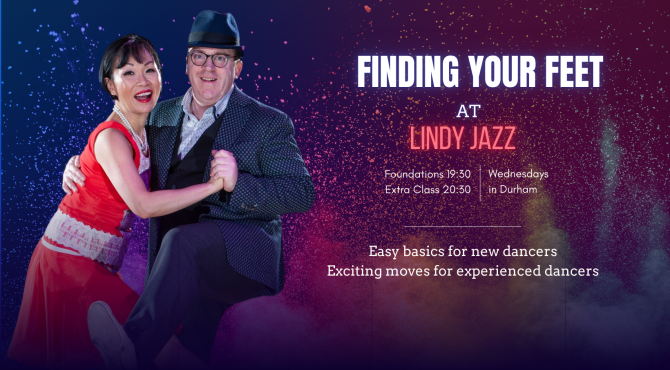
  4. Finding Your Feet at Lindy Jazz

    March 17, 2026 by Joo-Lee

    What to Expect and Why It Works This Way

    Starting something new always comes with a mix of excitement and uncertainty… and if you’ve ever walked into your first Lindy Jazz class and thought,
    “Am I the only beginner here?” or “Why are there so few beginners in this class?” you’re not alone.

    New people often share this experience. They notice that many people stay on for the second class. They wonder if the first class, our Foundations class, is really just for beginners.

    It’s such a good question and a lovely opportunity to explain how things work at Lindy Jazz.

    We Have a Structure… But It’s Not Rigid

    At Lindy Jazz, we do have a structure for teaching.

    But that structure is designed to adapt to you, not the other way round.

    Over the years, the way people join and progress has naturally shifted. There was a time when almost everyone attended just the first class, our Foundations Class. Now, many people choose to stay for both.

    Rather than separating everyone into fixed levels, we’ve allowed the structure to evolve with our members.

    The Foundations Class Is For Everyone

    It’s easy to assume that the first class is just for beginners, or that attending it again means you’re “going back.”

    That’s not how it works here.

    You will see that every member takes part in the Foundations Class.

    It’s not about repeating the exact same material or starting again.
    It’s about building, refining and deepening your dancing.

    Each week, the focus may feel familiar, but your experience of it changes as you grow.

    The same step can feel completely different when:

    • your timing improves
    • your connection becomes clearer
    • your confidence increases

    So rather than “going back,” you are actually moving forward with stronger foundations.

    Even very experienced dancers keep coming back to the basics, because that’s what builds strong, reliable technique.

    Why Our Classes Are Mixed

    You might notice that the Foundations Class isn’t made up of only brand new beginners.

    And that’s intentional.

    A mixed group creates something really valuable:

    • Newer dancers get support and reassurance from those with a little more experience
    • More experienced dancers improve their own dancing by adapting to different partners
    • The whole room feels more like a real social dance environment

    At first, this can feel slightly uncomfortable, especially if you feel like the only beginner.

    But that feeling is temporary and often the quickest path to progress.

    Why We Don’t Say “Beginner” or “Advanced”

    We’ve consciously moved away from labels like “beginner” and “advanced.”

    Not because levels don’t exist, but because those words can quietly create pressure and hierarchy.

    Instead, we keep things simple.

    The second class is called the Extra Class.

    It’s not about being better.
    It’s about having:

    • extra time
    • extra headspace
    • extra energy

    The Extra Class & What It Really Means

    Anyone can join the Extra Class when they feel they have those extra resources.

    As a gentle guide:

    • You will usually have completed around 6 weeks of classes
    • You will have a basic understanding of rock steps and triple steps, your core vocabulary
    • You can let your arms swing freely with a relaxed, easy tone, keeping tension to a minimum

    But here’s the most important part.

    The Extra Class is not about ability. It’s about mindset.

    The Mindset We Expect

    You are expected to:

    • Be patient. Give things time to settle and grow.
    • Be accepting. Allow yourself and others to make mistakes, knowing this is a natural and essential part of progress.
    • Be open-minded. Learn through experience, not perfection.

    A common misunderstanding is thinking
    “I’ll wait until I’m better before I join.”

    But in reality you become better by joining and letting go of needing everything to be perfect.

    If You Feel Out of Your Depth

    IIt’s very common to feel a little overwhelmed at times, especially in the early weeks.

    If that happens, the best thing you can do is not overthink, assess or analyse.

    You don’t need to understand or remember everything straight away.

    Just stay with the music, keep moving, and allow things to settle in their own time.

    Instead:

    • Allow yourself to miss things
    • Allow yourself to not grasp everything immediately
    • Stay with the music and keep moving

    Learning to dance isn’t about getting everything right in the moment.

    It’s about letting things settle over time.

    And something lovely tends to happen:

    • You begin to recognise the steps
    • You feel more comfortable with different partners
    • You realise you’re more capable than you first thought

    Little by little, it starts to click.

    Want to give it go?

    No experience needed. Just come along and enjoy it.

    👉 Book your place: https://www.lindy-jazz.co.uk/weekly-classes


  5. It’s Not About Levels… It’s About Stages. Where Are You?

    February 16, 2026 by Joo-Lee

    Lindy Hop, Brass Festival Durham, Lindy Jazz

    When new members first step into a Lindy Jazz class, most begin in Stage One: Unconscious Incompetence. It’s that “I don’t know anything!” moment. You don’t even know what you don’t know, and that’s exactly where curiosity begins.

    Stage Two is Conscious Incompetence. You realise how much there is to learn and think, “I still don’t know anything, but I’ll keep going.”

    Stage Three is Conscious Competence: “Oh yes, I think I’ve got it.” You’re improving, but you’re still concentrating.

    Stage Four brings a new awareness: “Oh my, there’s so much more to learn.” Instead of feeling overwhelmed, you start to enjoy the depth of it.

    Finally, Stage Five is Unconscious Competence. You don’t have to think; you just dance. The music carries you, your body responds, and social dancing feels natural and free. Yet even here, the loveliest dancers keep a quiet curiosity. They notice, refine, revisit the basics and stay open, because there is always another layer of musicality, connection or style to discover.

    A gentle reminder about Stage Three. When we feel we’ve “got it”, it can be tempting to think the basic moves are too simple or repetitive. In reality, practising the basics keeps your dancing clear, deepens your connection and helps you layer movements together with style. Working through this stage is often the moment your dancing becomes more creative and effortless. The journey doesn’t stop; it simply becomes richer.

    At Lindy Jazz, you’ll always find people at different stages learning side by side. With new dancers and experienced dancers sharing the floor, we naturally adapt to one another. Experienced dancers grow in patience, clarity and musicality. Newer dancers build courage and confidence. Everyone develops connection.

    This is social learning in action. We are not just learning steps. We are learning how to listen, respond, support and enjoy dancing with many different people. That social element is not an extra; it is central to becoming a truly great social dancer.

    So, what stage do you think you’re at?
    Who have you helped on your dance journey?
    And who helped you when you first joined Lindy Jazz?

    We’d love to hear your story.


  6. Helpful Habits

    October 23, 2025 by Joo-Lee

    A habit is something you do regularly and automatically — often without thinking — because you’ve repeated it many times before.
    In short: a habit is a repeated action that becomes part of your routine.

    Whether it’s brushing your teeth, checking your phone, or tapping your foot to music — habits shape how we live and learn.
    The same is true in dancing.


    Dancing Habits — Helpful or Unhelpful?

    When we come to Lindy Jazz, most of us are here for fun — to relax, enjoy the music, and meet lovely people.
    But sometimes, without realising it, we try a bit too hard.
    We overthink, analyse, and tense up in the process.
    And before we know it, those thoughts and actions become… habits.

    So let’s pause for a moment.
    Are your current habits helping you dance with more freedom — or holding you back?

    Becoming aware of your habits is the first step to dancing with more ease and joy.
    Once you spot an unhelpful habit, you can swap it for a more helpful one.


    Helpful Habits for Lessons

    1. Showing up (even on days you feel tired!)
    2. Imagining you know nothing — stay open and curious
    3. Smiling
    4. Laughing — it helps you to relax & learn faster
    5. Listening carefully
    6. Giving it a go without needing to get it right
    7. Counting along during lessons
    8. Smiling at your partner — and saying nothing!
    9. Asking your teachers for advice before or after class
    10. Bouncing gently to keep your energy alive
    11. Swinging your arms freely
    12. Relaxing your shoulders, elbows, wrists, hips, and ankles
    13. Letting go of the need to be right right now

    Helpful Habits Between Lessons

    1. Practising Rock Step Triple Steps (RSTS)
    2. Making short videos of your RSTS practice to check your progress
    3. Sharing your practice clips in our WhatsApp group
    4. Watching Lindy Jazz videos for reminders and inspiration

    Unhelpful Habits for Lessons

    1. Passive movement without bounce
    2. Overthinking
    3. Analysing every step
    4. Imagining people are watching you (they’re not — they’re busy thinking the same!)
    5. Looking at your feet
    6. Giving your partner advice
    7. Focusing too much on “getting it right”
    8. Trying to remember everything
    9. Referring back to other dance styles or your previous dance experience
    10. Saying negative things about your own dancing
    11. Gripping your joints — shoulders, elbows, wrists, hips, ankles
    12. Leaders being hesitant
    13. Followers anticipating or dancing ahead

    Your Turn

    Take a moment to check this list.
    Which habits do you already have?
    Which ones would you like to build — or let go of?

    Remember, every time you repeat something, you’re training your body and your brain.
    So let’s make sure we’re training the habits that help us feel free, confident, and joyful on the dance floor.

    See you at the next class — ready to smile, swing, and enjoy every step. 💃🕺


  7. Swing into Summer with Lindy Jazz! 🎶🌟

    April 27, 2025 by Joo-Lee

    Our Swing Dance Course is now underway — but there’s still time to join the fun!

    💃🕺 Wednesdays, from 30 April 2025 at The Cartologist, Durham DH1 4NQ

    Whether you’re brand new to Lindy Hop or looking to brush up your moves, this course is designed to help you dance with style and confidence at social events.
    You’ll learn fun, iconic steps — including the Swing Out — in a relaxed, friendly environment.

    Here’s What’s Happening Each Week:
    19:30–20:15: Swing Dance Fundamentals (perfect for all levels)
    20:15–21:00: Extra Class (for experienced dancers)
    21:00–22:00: Jazz Social (open to all — just £4 on the door!)

    Not ready to commit to the course?
    No problem — you can still Swing By for the Jazz Social!
    Enjoy a drink, dance your own dance, and soak up the uplifting vibes from 9–10pm every Wednesday. 🎷

    Extra Perks for Course Members:
    ✨ Access to lesson recap videos online
    ✨ Private WhatsApp group for questions & encouragement
    ✨ Optional online feedback on your practice
    ✨ A welcoming, supportive community of dancers

    Book your place now and swing into summer with style!

    Click here for more details.


  8. Social Dancing at The Cartologist!

    March 30, 2025 by Joo-Lee

    Exciting News – A New Twist for Our Final Class!

    We have something exciting to share with you! For a while now, we’ve been thinking about how to create a more sociable atmosphere for our social Lindy Hop classes. While the church hall is a great space with a lovely smooth floor, and our Week 6 meet ups at Fram Ferment are always fun, we want to offer you even more!

    So for the final Wednesday of this course, on 9 April, we’re trying something new, and we’d love your thoughts! For our final class, we invite you to The Cartologist, a beautiful bar close to the station, where we’ll have exclusive use of their stunning Summer Room. The staff will clear the space so we can hold our usual two classes, followed by an extended Social Dancing session from 21:00-21:45—at no extra charge!

    This will be a perfect chance to dance with each other, practise your moves, or just enjoy your favourite swing tunes. If you have friends who are curious about Lindy Hop or just want to soak up the atmosphere and Andy’s fantastic playlist, they’re welcome to join us too!

    Good news for drivers: There’s plenty of on-street parking nearby, and it’s free after 18:00, making it even easier to join us for the evening.

    Andy and I will be arriving early to have a bite to eat at 18:15, so if you fancy grabbing some food or just popping in for a chat before our classes start at 19:30, you’re more than welcome!

    With the lighter evenings, we hope this will be a great opportunity for those travelling from outside Durham to stay a little longer and fully enjoy the experience. Of course, you’re free to leave at any time that suits you.

    After we try this out, we’d love your feedback! Would you like this to be a special Week 6 event for future courses? Would you prefer to keep things as they are? Or could this even work as a venue for all 6 weeks of a summer course?

    We want to strike the right balance between structured learning and a relaxed, social dance environment—so your input is invaluable!

    We can’t wait to hear what you think and, most of all, to dance with you at The Cartologist on Week 6 – that’s 9 April.

    A summary:

    • This coming Wednesday 2 April is Week 5. We’re dancing at St Aidan’s as usual
    • Wednesday 9 April is Week 6. We’re dancing at The Cartologist (in a private space!) and afterwards have a chat to find out everyone thinks!

    Questions & Answers – Week 6 at The Cartologist
    ❓ Will this new format be permanent?
    ➡️ No, this is just a trial, mainly for the summer months.

    ❓ Do I have to book separately for Week 6?
    ➡️ No, it’s included in your course. Just turn up and enjoy!

    ❓ Can I bring a friend who doesn’t dance?
    ➡️ Yes! They’re welcome to watch, soak up the atmosphere, and enjoy the music.

    ❓ Will there still be a structured lesson?
    ➡️ Yes! We’ll run our usual two classes before the social dancing.

    ❓ Is there parking nearby?
    ➡️ Yes, plenty of on-street parking, free after 18:00.

    ❓ Do I have to stay for the social dancing?
    ➡️ Not at all—stay as long as you like!

    ❓ Could this be a venue for future courses?
    ➡️ That depends on feedback. Nothing is fixed yet. So, let’s check it out and talk about it. We’d love to hear your thoughts!

    Let us know if you have any other questions! 😊

    Booked up for the next course? Click here.


  9. Adapting in Social Dance: The Best Way to Support Beginners in Class

    March 2, 2025 by Joo-Lee

    Dancing is All About Adapting

    If you’ve been dancing for a while, you’ve probably been in a class where a new beginner is struggling with the steps. Your instinct might be to step in and offer some guidance—to explain the move differently, correct their footwork, or give them extra tips. After all, you just want to help, right?

    I completely understand your good intentions, but here’s something to consider: when an experienced dancer starts ‘teaching’ a beginner in class, it can actually have the opposite effect. Instead of feeling supported, the beginner often feels overwhelmed, confused, or even discouraged. They might worry they’re doing everything wrong, feel pressured to get it ‘right’ immediately, or even dread coming back.

    Focus on Your Own Learning Instead

    Instead of focusing on the new person’s learning, shift your focus to your own. How well can you adapt to your new partner? Social dancing isn’t about perfecting steps or performing—it’s about adapting. Adapting to different partners, different energy levels, different interpretations of the music.

    Each time you dance with someone new, challenge yourself to adjust your movement to connect with them. Can you match their timing? Can you sense their comfort level and create a dance that feels good for both of you? Instead of trying to ‘fix’ their dancing, see how well you can adapt to the moment.

    Why ‘Helping’ Can Be Counterproductive

    When you correct or explain things in your own way, you’re introducing a different perspective than what the teacher is presenting. This can contradict the lesson, disrupt the flow of the class, and leave the beginner unsure of who to listen to. It also takes them out of the natural learning process—making mistakes, experimenting, and gradually improving at their own pace.

    The Best Support You Can Give

    Instead of instructing, correcting, or ‘helping’ during class, try these instead:

    Smile warmly and encouragingly – Let them know it’s okay to stumble. Every dancer has been there!

    Allow mistakes to happen – It’s all part of the learning process. Trust that they will improve with time, just like you did.

    Be a friendly presence – If you want to support a beginner, the best time to do so is before or after class. A simple chat, a kind word, or a shared laugh about the learning journey can make them feel truly welcome.

    Dancing is All About Adapting

    At the heart of social dancing is the ability to adapt—not just to different music, but to different partners and even to your own energy levels, which may change from week to week. The best dancers aren’t the ones who execute perfect moves; they’re the ones who can adjust, connect, and make every dance enjoyable for themselves and their partner.

    So next time you dance with a beginner, resist the urge to teach—simply enjoy the dance, offer a warm smile, and let them discover their own way. Your patience, encouragement, and ability to adapt will do far more to support their learning than any technical tip ever could. 💛


  10. Train Your Feet, Train Your Mind – Dance for Joy!

    February 19, 2025 by Joo-Lee

    Lindy Jazz Events

    Dancing isn’t just about learning steps—it’s about letting go and enjoying the moment. But sometimes, our minds get in the way. We compare ourselves to others, worry about making mistakes, or feel embarrassed when things don’t go as planned.

    Here’s the truth: embarrassment is self-inflicted. Your mind creates fear where there is no real danger. No one is judging you, and no one remembers if you fumble a step. But if you let that fear take over, you’ll miss out on the joy of dancing.

    Your mind loves problem-solving. So, instead of letting it convince you that you are the problem, give it something useful to focus on—like a dance move, the rhythm, or simply having fun. Or better yet, shift the focus away from yourself entirely. Look around—see someone sitting out who looks like they’d love to dance? Take a moment to invite them onto the dance floor. Getting past your own fears to help someone else can be just the thing to remind you that dancing is about connection, not perfection.

    Often, our fears come from linking dancing with performing. But at Lindy Jazz, we are not performing—we are social dancing. There is no audience, no pressure to impress, just a shared love for swing music and good company. That’s what we mean when we say we dance for fun.

    Let’s put this into practice on 12 April at our Swing Dance Night with the Bright Street Big Band and DJ Andy. Step onto the dance floor, focus on the music, and remind yourself—there’s nothing to fear, only fun to be had!