Posts Tagged ‘Swing Dance Durham’

  1. Can You Dance? Why Lindy Hop Is for Everyone

    July 24, 2026 by Joo-Lee

    Can You Dance? Who Will Laugh?

    “I’ve got two left feet.”

    “I can’t dance.”

    “I’d be too embarrassed.”

    These are some of the most common things people say before joining beginner dance classes.

    Over the years of teaching Lindy Hop and social swing dancing, I have heard these worries many times. What is interesting is that they rarely come from people who genuinely cannot dance.

    They usually come from people who have been led to believe they cannot.

    Perhaps someone laughed at them. Perhaps they had a difficult experience in a dance class. Or perhaps they have compared themselves with professional dancers on television and decided that dancing is not for them.

    But dancing is not just about performing, competing or looking perfect.

    Partner dancing can be about music, connection, friendship and having fun with another person. That is especially true of social swing dances such as Lindy Hop.

    The Lady Who Thought Her Husband Couldn’t Dance

    One lady I know often laughed about her husband’s dancing. In her eyes, he was clumsy.

    Her idea of good dancing was graceful, flowing movement. She listened mainly to the melody and enjoyed moving in a smooth, lyrical way. That was the style she preferred, so naturally, she judged all dancing through that lens.

    Then something unexpected happened.

    At one of our public social dance events, there was a queue of women waiting to dance with her husband.

    She could not understand it.

    How could this man, whose dancing she had laughed at for years, suddenly become such a popular partner?

    The answer was simple.

    He had rhythm.

    He was not worried about making every step look perfect. He was not analysing every movement or constantly wondering what should happen next.

    He listened to the beat, relaxed into the music and was happy to improvise.

    Most importantly, he looked as though he was having fun.

    People wanted to dance with him because joy is contagious.

    What Makes Someone a Good Social Dancer?

    In partner dances such as Lindy Hop, being a good dancer is not simply about knowing lots of steps.

    A good social dancer helps their partner feel comfortable.

    They listen and respond to the music and to the person dancing with them. They stay in rhythm, adapt when something unexpected happens and enjoy sharing the dance.

    Social swing dancing is not a test. You do not have to squeeze every move you have learned into one song or prove that you are the best dancer in the room.

    Often, the people others most enjoy dancing with are not necessarily the most technically advanced.

    They are the dancers who feel relaxed, friendly, musical and connected.

    They make partner dancing feel like a shared conversation rather than a performance.

    You Don’t Need Dance Experience to Learn Lindy Hop

    Many people worry that they need some dance experience before joining a Lindy Hop class.

    They do not.

    Good beginner dance classes are created for people who are starting from the beginning. You should not be expected to know the steps, understand the terminology or arrive with a dance partner.

    A supportive beginner Lindy Hop course will introduce the rhythm and movements gradually. You will have time to practise, ask questions and build your confidence one step at a time.

    You do not need exceptional coordination.

    You do not need to be young.

    You do not need to be especially fit or flexible.

    You simply need to be willing to learn and have a go.

    There Is No Single Way to Dance

    The couple in my story reminded me of something important.

    Neither of them was wrong.

    She enjoyed structure, precision and thinking carefully about her movements.

    He enjoyed freedom, rhythm and responding naturally to the music.

    They simply had different ideas about what good dancing should look and feel like.

    For some people, memorising steps and performing them accurately is a clear sign of dance skill.

    For others, especially in social swing dancing, being able to feel the rhythm, connect with a partner and move naturally matters far more.

    The mistake is assuming that our own definition of dancing is the only correct one.

    Who Told You That You Couldn’t Dance?

    f you have convinced yourself that you cannot dance, take a moment to think back.

    Who first gave you that idea?

    Was it a teacher, friend or family member?

    Did someone laugh at you at a school disco?

    Did you compare yourself with someone who had years of dance training?

    Perhaps you once attended a class where everything moved too quickly and nobody explained clearly what you were supposed to do.

    One uncomfortable experience or careless comment can remain with us for decades.

    But it does not make the belief true.

    It may simply mean you were being judged according to someone else’s preferences. It may also mean that you had not yet found the right dance style, teacher or class for you.

    Different Dance Styles Value Different Skills

    Dance is not one single activity.

    A ballet dancer needs different skills from a breakdancer. A ballroom dancer moves differently from a salsa dancer. Competitive dancing also has very different aims from relaxed social partner dancing.

    Swing dances such as Lindy Hop, Charleston and Balboa have their own distinctive character and movement.

    Lindy Hop grew as an African American social dance. It celebrates rhythm, musicality, individuality, improvisation, connection and playfulness.

    You do not need to do the splits.

    You do not need to perform dramatic lifts.

    You do not need to look like a professional dancer.

    You need to be willing to listen, learn, connect with your partner and enjoy the music.

    Nobody Dances Lindy Hop in Exactly the Same Way

    One of the wonderful things about Lindy Hop is that no two people dance in quite the same way.

    Some dancers have lots of bounce and energy.

    Some are smooth and understated.

    Some enjoy playful footwork.

    Others prefer simple movements that help them relax and connect with their partner.

    Some dancers are naturally expressive, while others have a quieter style.

    Even when two couples use the same basic Lindy Hop steps, their dancing may look completely different.

    That individuality is not a problem that needs to be corrected.

    It is one of the things that makes social swing dancing so interesting, enjoyable and welcoming.

    Mistakes Are a Normal Part of Partner Dancing

    Social partner dancing involves two people making decisions together in real time.

    Occasionally, a movement will not happen as expected.

    A signal may be unclear. Someone may step in a different direction. The music may suddenly change, or one of you may simply forget what you intended to do.

    That does not mean you have failed.

    Experienced social dancers do not stop and panic whenever something unexpected happens. They adapt, smile and continue dancing.

    In fact, what initially feels like a mistake can sometimes become the most enjoyable or musical moment of the dance.

    You do not need to get everything right to be a good dance partner.

    Being considerate, responsive and willing to keep going matters much more.

    Stop Comparing Yourself with Other Dancers

    If you constantly compare yourself with the people around you, it becomes difficult to relax and enjoy learning.

    Our bodies are different.

    Our experiences are different.

    Our confidence levels are different.

    We hear and interpret music in different ways.

    Some people learn quickly by watching. Others need a clear explanation and more time to practise.

    Some dancers enjoy turns, energetic movements and playful footwork. Others prefer calmer, gentler dancing.

    The aim is not to become a copy of someone else.

    The aim is to develop the skills that help you feel comfortable, natural and connected while still dancing as yourself.

    Find Beginner Dance Classes That Suit You

    Not every dance class suits every person.

    Some people thrive in highly technical, competitive or performance-focused environments.

    Others blossom in relaxed social dance classes where kindness, laughter and encouragement matter just as much as learning the steps.

    A welcoming beginner dance class should never make you feel foolish for not knowing how to dance already.

    Learning is why you are there.

    You should be given time to understand the rhythm, practise the movements and gradually become comfortable dancing with different partners.

    Before deciding that you “can’t dance”, try a different teacher, class or dance style.

    Perhaps you simply have not found the right dance community yet.

    What Is Your Reason for Learning to Dance?

    It is worth thinking about what you would like to gain from dancing.

    Would you like to perform or compete?

    Would you like to improve your coordination and fitness?

    Would you like to meet friendly people and enjoy a new social activity?

    Do you love swing and jazz music?

    Would you like to feel more confident dancing at parties and social events?

    There is no single correct goal.

    For many people attending Lindy Hop classes, the aim is not to impress an audience or become the best dancer in the room.

    It is to enjoy the music, share a few minutes of connection with another person and feel happy and natural on the dance floor.

    That is a valuable goal in itself.

    Looking for Swing Dance Classes in Durham?

    The next time someone laughs at your dancing, remember that they are simply viewing dance through their own eyes.

    Their opinion is not a verdict on your ability.

    It is only their preference.

    Remember the husband who believed he could not dance because his wife laughed at him. He turned out to be exactly the sort of social dancer everyone wanted to dance with.

    Perhaps you do not need to become a completely different dancer.

    Perhaps you simply need to find the music, teacher and dance community that bring out the best in you.

    If your goal is to feel and look natural while having fun social dancing, look for beginner Lindy Hop classes near you.

    And if you are searching for friendly swing dance classes in Durham, come and give a Lindy Jazz beginner course a go. You can learn Lindy Hop in a relaxed, supportive environment while enjoying wonderful swing music, meeting new people and building your confidence one step at a time.

    You may discover that you could dance all along.
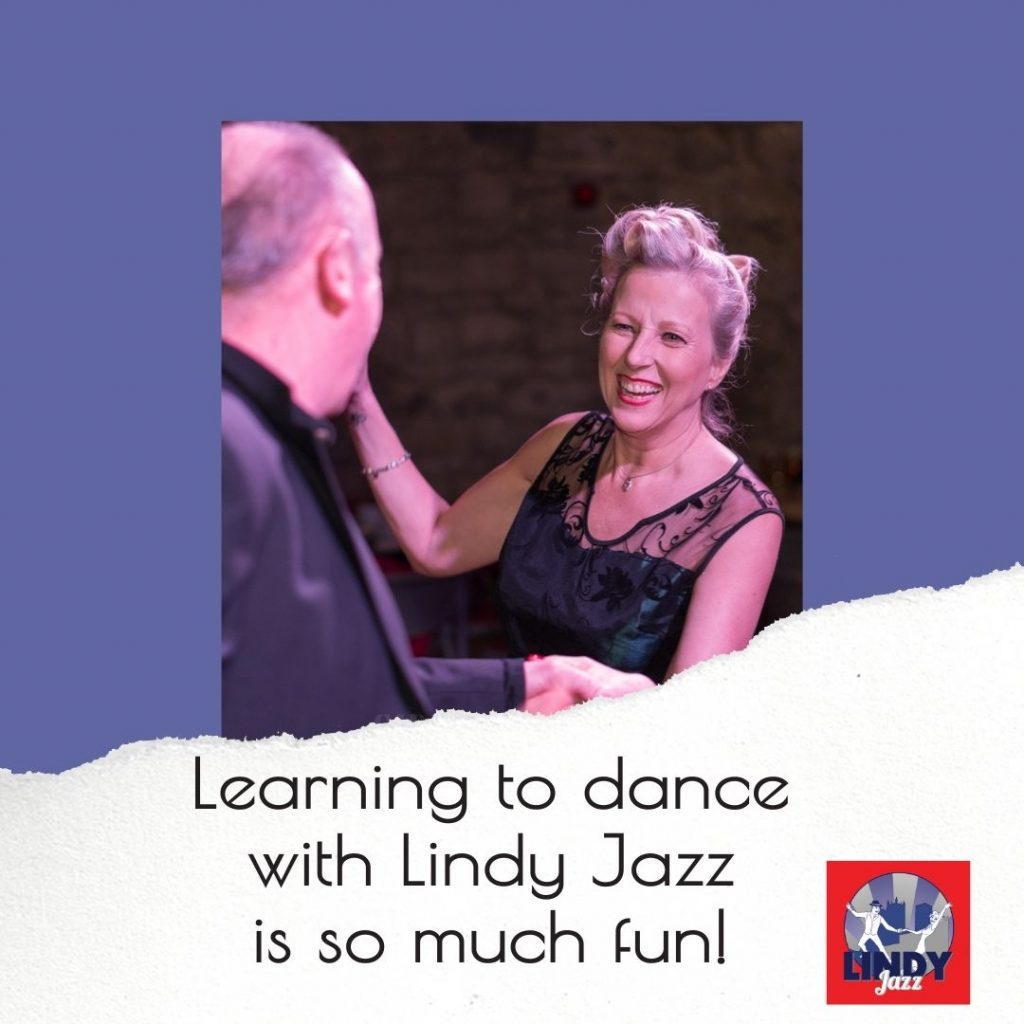

  2. How to Dance with More Confidence on the Social Dancefloor

    May 28, 2026 by Joo-Lee

    You know that moment.

    The band strikes up. Or your favourite swing DJ plays one of your favourite tracks. You love the music. You want to dance. You know you have been learning steps and moves in class.

    And then suddenly, as if by magic, every move you have ever learnt disappears from your memory.

    Your mind goes blank. Your body feels unsure. You think, “What do I do now?”

    If this sounds familiar, please know this: you are not alone. This is a very normal stage of learning to social dance.

    At Lindy Jazz, we often meet dancers who know a few moves, enjoy their classes, and can dance well when they are being guided through the material. But when they get onto a social dancefloor, everything feels different. There is music playing, people around you, a partner to connect with, space to navigate and no teacher calling out what comes next.

    That is why social dancing is not just about learning more moves. It is about learning how to use the moves you already have.

    If you are looking for a beginner dance class in the North East, or you have already started learning Lindy Hop but still feel unsure when dancing socially, this blog is for you.

    Being New Is Not About How Long You Have Been Dancing

    When we say someone is “fairly new”, we do not mean they have danced for six weeks, six months or even a year.

    Being new is not really about time. It is about familiarity.

    If you still feel unsure of yourself, you are still fairly new. If your moves do not quite link together yet, you are still fairly new. If you can remember a move in class but forget it when the music starts, you are still in that stage where your dancing is becoming familiar.

    That is perfectly fine.

    Some people become confident quickly because they dance often, practise regularly and go to lots of social events. Other people take longer because they come once a week, miss a few classes, or simply need more time for the dance to settle into their body.

    There is nothing wrong with that. Learning to dance is not a race.

    Our beginner swing dance classes are designed with this in mind. We do not expect you to remember everything instantly. We help you build confidence step by step, so your dancing becomes clearer, calmer and more enjoyable.

    More Moves Do Not Always Mean More Confidence

    When dancers feel unsure, they often think the answer is to learn more moves.

    But this can sometimes make things worse.

    If you have too many moves in your head and none of them feel familiar, social dancing can become overwhelming. You may have a huge list of steps, but when the music begins, none of them are ready to use.

    We know this feeling well.

    Many years ago, we tried learning tango and ballroom. Our teachers were kind and enthusiastic, and they gave us lots of variety because they wanted us to stay motivated. But for us, it had the opposite effect. We were given so many moves that we could not remember any of them under pressure.

    It was not that the teaching was bad. It was simply too much for where we were at the time.

    That experience shaped how we teach now.

    For dancers who are still building confidence, fewer moves can actually be much more useful.

    Build a Small Toolkit You Can Trust

    nstead of trying to collect as many moves as possible, we recommend building a small toolkit of movements you can use, reuse, recycle and repurpose.

    A good toolkit gives you options without overwhelming you.

    You do not need twenty moves if you cannot remember them. You need a few movements that feel familiar enough to use when the music starts. Once you understand those movements well, you can begin to add variations, changes of direction, timing changes and small improvisations.

    This is where confidence begins.

    Not from knowing everything, but from knowing a few things well.

    This is one of the reasons Lindy Jazz is such a good choice if you are looking for beginner Lindy Hop classes, beginner swing dance classes, or a friendly beginner dance class in the North East. We focus on helping you feel comfortable, not overwhelmed.

    A Simple Lindy Hop Social Dance Toolkit

    For someone who is still fairly new to social dancing, we recommend starting with these core tools.

    1. Weight Shift

    This is not really a move, but it is one of the most important skills in dancing. If you can shift your weight clearly from one foot to the other, you can stay connected to the music and to your partner. When in doubt, you can keep dancing by simply shifting weight and staying with the rhythm.

    1. Basic triple steps

    Triple steps are one of the building blocks of Lindy Hop. They help give the dance its bounce, rhythm and swing. When triple steps feel comfortable, many other movements become easier to understand.

    1. Passby

    A Passby is simple, useful and endlessly adaptable. You can pass one way, pass the other way, keep it very basic, or later add turns and variations. But if you are still building confidence, stay with the simple version first. Make it clear. Make it comfortable. Make it usable.

    1. Send Out

    The Send Out helps you move from a closer position into open position. This is a very useful social dance skill because it helps the dance breathe and gives both partners more space.

    1. Bring Back

    The Bring Back does the opposite. It helps you return from open position back into a closer connection. Once you can send out and bring back with confidence, your dancing begins to feel more connected and less like a set of separate moves.

    1. Sugar Push

    The Sugar Push is a brilliant bonus tool. It is compact, playful and full of possibilities. You can keep it simple, vary the handhold, change the timing, add a little jump out, or include small improvisations inspired by steps such as the Shim Sham.

    These six tools may sound simple, but they can take you a long way.

    The Magic Is in How You Use the Moves

    The aim is not to do the most complicated version of every move.

    The aim is to understand each movement so well that it becomes easy to use. Once a move feels familiar, you can start to play with it.

    A pass by can become several different pass bys. A sugar push can feel smooth, bouncy, playful or cheeky depending on the music. A weight shift can become a moment of calm, a musical pause, or a way to reconnect when your brain goes blank.

    This is where social dancing becomes enjoyable.

    You stop thinking, “What move comes next?” and start thinking, “What can I do with what I already know?”

    That is a much calmer place to dance from.

    Whether you are attending your first beginner swing dance class or returning to dance after a break, this approach helps you build real social dance confidence.

    What to Do When Your Mind Goes Blank

    If you are on the social dancefloor and your mind suddenly empties, do not panic.

    Come back to the simplest thing.

    Shift your weight. Listen to the music. Breathe. Smile at your partner. Use one move you know well.

    You do not have to impress anyone. You do not have to fill every second with clever footwork. You do not have to prove that you belong on the dancefloor.

    You belong there because you are dancing.

    The more you return to simple, familiar tools, the more confident you will become. Over time, the movements will begin to link together. You will stop feeling as though you are dragging steps out of your memory and start feeling as though the dance is flowing more naturally.

    Confidence Comes from Familiarity

    Confidence in social dancing does not come from knowing hundreds of moves.

    It comes from familiarity.

    It comes from knowing what your body is doing. It comes from understanding how one move connects to another. It comes from practising a small number of useful tools until they feel reliable.

    So if you still feel unsure, be kind to yourself.

    You do not need more pressure. You do not need to rush. You do not need to learn every move at once.

    Start with a small toolkit. Use it often. Repeat it. Recycle it. Repurpose it. Add variations when you feel ready.

    That is how your dancing grows.

    And next time the band strikes up, or your favourite swing DJ plays that track you love, you may find that instead of freezing, you have somewhere simple and familiar to begin.

    Join Our Lindy Jazz Beginner Swing Dance Classes in Durham

    Our Lindy Hop Social Dance Skills course is designed to help you feel clearer, calmer and more confident on the social dancefloor.

    We will help you build a small, reliable toolkit of moves and show you how to use them in different ways, without overwhelming you with too much material.

    If you are searching for beginner swing dance classes, beginner Lindy Hop classes, or a friendly beginner dance class in the North East, Lindy Jazz offers clear, welcoming classes in Durham.

    You do not need a partner. You do not need previous dance experience. You just need comfortable shoes and a willingness to give it a go.

    Come and learn how to link your moves, remember them more easily and enjoy your dancing more.

    Lindy Jazz: beginner-friendly swing dance classes in Durham and the North East.


  3. How Do The Lindy Jazz Courses Work?

    September 30, 2023 by Joo-Lee

    We’d like to thank Vivienne, one our Lindy Jazz members for her views on how it all works!

    Is everyone in the class really good already?
    When I was a beginner, my main goal was simply to learn to swing dance to fabulous music. I wasn’t concerned about whether others were better dancers than me—I just wanted to gather the courage to go on my own. It was a personal achievement I aimed for, and thanks to Joo-Lee, Andy, and my fellow dancers, I felt incredibly welcome.

    Will I be the oldest or the slowest in the class?
    Personally, I didn’t worry about the age of my fellow dancers. When I first attended, the class had a diverse range of ages, so I never felt uncomfortable.

    How long does it take to be able to dance?
    There isn’t an exact timeframe for this. We learn foundational steps that serve as building blocks for more complex routines and moves. Personal attitude plays a role too—learning to relax, not being too critical of yourself if things don’t go perfectly, and embracing the freedom to express your own personality through dance. With Joo-Lee and Andy, there’s no pressure to get it right immediately. Dancing is an exciting, ongoing journey.

    Are the Lindy Jazz courses suitable for beginners?
    Absolutely! Lindy Jazz courses are specifically designed for beginners. The learning pace is relaxed, breaking down everything from basic steps to counting beats, rhythm, and the unique style of Lindy Jazz. Supportive videos recap the steps, and Joo-Lee and Andy are excellent, approachable teachers who are always happy to help with any dance-related questions.

    What is the Extra Class?
    Extra classes are suitable for anyone with extra time, extra energy ,extra dance experience, extra patience and want extra moves. At Lindy Jazz, there are no assessments, that’s why you won’t hear us talking about ‘levels’. It’s all about the amount of time, energy and patience you have on a Wednesday evening!

    If I can’t attend every class in the course, will I fall behind or miss out?
    Not at all! We provide recap videos via an online link that you automatically gain access to when you start the course. Additionally, there’s a Messenger group where you can watch videos or share supportive messages with other dancers. You’ll also receive emails about upcoming workshops and social events, ensuring you stay connected even if you miss a class.

    What is a Jazz Social?
    It’s your chance to: 🎷 Enjoy DJ Andy’s amazing swing playlist
    🕺 Relax, dance, practise or just soak up the atmosphere
    🌙 Every Wednesday in the summer courses 21:00-22:00
    Just £4 on the door or free if you’re a course member.

    Learn to swing dance with Lindy Jazz courses. Easy basics for beginners and exciting moves for experienced dancers.

    Sign up here to receive occasional emails from Lindy Jazz with updates and upcoming courses.


  4. One Small Step

    November 30, 2022 by Joo-Lee

    I didn’t get the chance to Swing dance when I was young. I only learned to Swing dance in my 30’s. I know that if I’d told myself then that I needed to be a natural born dancer or have dance experience before I turned up to my first Swing dance class, I wouldn’t be having so much fun Swing dancing let alone teaching Lindy Hop today.

    When you see me dance, it may look as if I have always found dancing easy. However, my ‘trade secret’ is that I make time for dancing, learning, and practising.

    The power of ‘keep going’

    40 years ago (yep! I feel old) I taught my first music lessons.

    I’d just passed my diploma & my piano teacher gave me the opportunity to cover her lessons. This changed my life!

    Suddenly, I had the opportunity to have first-hand experience of teaching, a glimpse at a career in music, and the self-belief to pursue my dream.

    The best part of all of it? I am blessed to have known wonderful students from across the globe who still keep in touch with me. I’ve been part of their musical journeys and I’ve seen them blossom, what a fantastic privilege!

    But music didn’t always come easy to me. Although I had a genuine passion for it, I got mediocre exam grades. I wasn’t considered to be ‘talented’ and was repeatedly told how much better other students were than me. This made it so hard to believe that the hard work I’d put into hours of practice would actually come to anything.

    But I kept going!  Even though at times my heart and head were saying different things. My heart said “But you want this, you want to teach music” and my head said “I am not sure if I am any good at all!”

    But I kept going!  I kept going by taking One Small Step each day. The One Small Step could be doing 5 minutes of practice or listening to the music I was studying. That One Small Step stopped me wasting time worrying about things I had no control over.

    The importance of building strong foundations

    Fast forward a few decades and I now specialise in something I never expected to! I teach advanced level music students at diploma and degree level to overcome performance anxiety by teaching them to build strong technique.

    How did that happen? Most super talented musicians who teach do not necessarily break down their technique as they already have a natural finesse. But as I had to work out the gaps in my own technique, I am now able to identify the gaps that I see over and over again in advanced level music students. Just like me, they were rushed through ‘the grades’ to pass exams at the expense of building solid foundations in their technique.

    What’s your One Small Step going to be?

    So how do you keep going when learning new dance skills feels hard?

    Keep attending class. Show up by being present, energetic, and positive.

    Ask yourself, “why do I want to learn to dance?.” Listen to your heart’s desire. Go with what you truly want and believe in and take your ‘One Small Step’ towards your dream. See what a difference it makes to your dancing and confidence.

    And if you miss a class? Don’t worry. Just log in to the Lindy Jazz course videos and you’ll catch up in no time!


  5. A Newbies’ Guide To DJam….. and what is Lindy A?

    December 23, 2016 by Joo-Lee

    If you’re new to the world of swing dancing, you may have heard other dancers talk excitedly about DJam, an international swing dance camp. But what exactly is a dance camp? Are there tents and campfires, and most importantly, do the dancers actually go camping? If you love camping then I am afraid you won’t find log cabins and singsongs (well, not at most dance camps anyway); a dance camp is usually just a weekend of learning through structured classes, with social dancing in the evening to enjoy your new-found skills.

    Now that we’ve got that cleared up, it’s time to talk about DJam! A blissful weekend of dancing, learning, meeting new people and having fun, DJam is a swing dance camp held in the stunning Beamish Hall Hotel in County Durham each year.

    Most dance camps are attended by experienced dancers. That’s because experienced dancers know that to improve their dancing a lot, they need to start learning from world-class teachers and dance with a wider range of dancers. They know that if they only ever dance with a small group of people and never venture outside of their local class, their dancing progress will plateau. As organisers of DJam, we also teach a local weekly class which attracts a regular influx of beginners so we know the worries that new dancers have when thinking about improving their dancing and how they don’t feel confident enough to come to DJam or come on their own. So I’ve summarised some information here to help all new dancers to get a flavour of DJam. At the time of writing, we have just 10 places left in the Lindy Hop beginner level ‘track’. So…..what is Lindy A? What is a track? What happens at DJam? If you’re a new beginner, read on……

    At DJam, there will be several tracks meaning different classes in different styles. Once you’ve decided on your track eg Lindy Hop, the next thing to do is to choose your level and Lindy A would be the beginners level where no previous dance experience would be required. Your teachers will know that everyone in your group will be new and possibly nervous! DJam teachers are hand picked not just for their dancing and teaching skills but also for their warmth, friendliness and care for new dancers.

    The teachers and the DJam Team are very approachable and will be happy to answer any questions about dancing; even if the questions may seem basic, for example, what to wear to the evening socials, how to ask for dances, what time the cabaret or competitions are on, what’s for lunch, anything!

    When you arrive at Beamish Hall at the start of the DJam weekend, you’ll be made to feel welcomed by the organisers & volunteers. You will be given lots of information and introduced to other beginner dancers, who won’t know others either so they’ll be just as nervous.

    The DJam schedule is packed with daytime classes, evening parties & various social activities. You can choose to do as little or as much as you want. In addition to your own track, meaning your set of Lindy Hop beginner classes that you have booked for in advance, you can also drop into taster classes. Taster classes are designed to give a little taste of other styles of dance and a whole host of interesting topics, for example. Blues, Balboa, Shag, Aerials, Swing Music. You don’t need to book for taster classes in advance. Once you’ve arrived at DJam, just take a look at your schedule and see what looks the most interesting to you.

    Your Lindy A classes will consist of a small group of dancers who will learn ‘from scratch’ – how to dance, what to do at social dances, how to understand the etiquette of social dancing, how to move well, how to dance to swing music, how to lead, follow and dance with people you don’t know etc. In short, your dance skills and knowledge of dancing and swing music will be transformed and you will feel a lot more confident when you next go dancing.

    You can choose your ideal ticket from a number of options and we call this a ‘pass‘,  so you can come for just Saturday or just two days or make the most of it and come for the whole weekend or even stay over at Beamish Hall Hotel. The DJam team, the volunteers and I will make sure that you feel included, enabling you to make the most of this opportunity.

    As the deadline for booking is fast approaching and there are only 10 places left, book now or contact me, Joo-Lee, for more information.

    More info: www.dance-at-djam.co.uk

    Deadline for booking: 30 December 2016

    See you at DJam!


  6. Do I Need To Learn Routines?

    December 9, 2016 by Joo-Lee

    Screenshot 2016-08-24 13.22.45

    New beginners often ask us to teach them a routine or a sequence when in fact, it’s easier to dance if you learn the skills to dance rather than try to memorise a lot of moves. So often we see new dancers  busy learning a whole bunch of moves. My question is, “Do you remember everything? Do your moves work when you social dance with dancers who haven’t done that exact class and those exact moves?” Perhaps what you’ve just learnt doesn’t work because you haven’t had the chance to consolidate anything and your body hasn’t had the chance to learn how to move. Then at social dances, you end up forgetting your moves.

    When learning a social dance such as the Lindy Hop, it can be easy to get stuck in a rut by just dancing patterns and routines, rather than learning to move naturally and confidently so that you don’t need to think and concentrate hard when you dance. If you develop the skills to move well and train your body to do what you want it to do, then you will be able to carry out new and exciting moves. I truly believe that we all need to learn how to move easily before being concerned about how many moves we can pull off on the dance floor.

    Using the building blocks and drills taught in class will give you structure, certainty and security when you dance. These are short phrases that you can practise over and over again until you develop the muscle memory for the basics, such as the pulse and rhythm. However, if you are new to this and have got used to set moves and routines, you may find it to be very unfamiliar but if you are able to spend 5 minutes a day practising these simple techniques, you will soon find dancing easier and more enjoyable.

    Then you might be asking yourself, “Will I have enough moves to get through a whole song without being boring to my partner?”. Well, the constant repetition of techniques like triple steps and Charleston kicks in class is not meant as a pattern for every dance, but rather they should be practised as useful drills that can help you to develop muscle memory, so that, with practice, you will be able to simply enjoy dancing without thinking consciously about the actual steps. When you start to intuitively dance like this and let your mind relax, then you will find it easier to move to the music in a fluid manner, which in turn will give your partner a really good dance too. In other words, knowing a few rules without being rigid with the rules can give you a lot of freedom!

    There’s no right or wrong way to dance, so if you prefer to dance a set of routines that you know, then that’s absolutely fine. As you gain more experience, you will find yourself naturally being able to take on these amazing and exciting skills.

    So if you’re keen to take your dancing to the next level, and wondering what skills you need to learn so that you get a strong grasp of the techniques to social dance with confidence,  then why not join us on Sunday 8th January for one of two excellent workshops, and give it a go?


  7. Lead or Follow: Who’s in Charge?

    November 23, 2016 by Joo-Lee

    Dance Partners

    Whether you’re a confident dancer, a newbie, or a dabbler, when it comes to dancing, sometimes there’s a bone of contention in partnerships when it comes to who is in charge. A recent interview I did with the BBC  got me thinking about the dynamics of dancing, and just exactly who should be taking the lead.

    When you go to a Lindy Hop class for the first time, it can often be quite a shock to learn that you don’t simply learn a dance routine off by heart and go on your way. Instead of being concerned with who’s in charge, and who should be doing what, it’s more of a conversation between you and your dance partner, rather than a rehearsed script that you learn off by heart. It’s important to feel what your partner is doing, and respond to it by using the moves and techniques you have been taught. Dancing, especially when it comes to swing dance, is all about spontaneity and communication and creating a connection with your partner that you can share. That’s why, when we hold classes we ‘rotate’ or ‘switch’ the partners so you’re not just dancing with the person you came with. This way you’re far less likely to have a dance domestic!

    We often find that if you’re dancing with a stranger (of course, they won’t necessarily be a stranger for long), you’re probably not going to be concerned with telling them what to do and how to do it, so your concentration and ability to communicate clearly improves. Dancing with a different partner also allows people of all different abilities and experiences to dance together, which can really help to develop your understanding and feel of the dance. Plus, it’s a lot of fun, and it’s definitely a great way to make new friends!

    Whether you’re on your own, part of a group, or in a couple, there’s room for everyone at our swing dance classes, and no one will be left out; Lindy Jazz offers you your first class for free, so there’s no excuse not to throw on your dancing shoes and give it a go.


  8. Social Dance Or Show Dance?

    September 30, 2016 by Joo-Lee

    strictly-come-dancing-judges

    What would you do if you had the chance to compete in Strictly Come Dancing? Would you go for it or would you find it a nerve-racking experience? Imagine learning a brand new skill, wearing a glitterry costume and performing in public, then being judged by professional experts and watched by millions of people at home.

    This got me thinking about why people dance, and how styles of dancing differ depending on whether you’re dancing socially, or for a competition. If you’re an entertainer, then you’ll enjoy impressing people with your skills, and for most beginners, it is this pressure to amaze that puts them off, but they needn’t worry. Dancing is a also a social skill, and when you’re not dancing for a competition or a show, it can be the most aamzing experience.

    When you dance for social reasons it’s  like learning a language. You’ll learn the words and  the grammar, and then you put it all together into sentences. You don’t learn a language just so you can stand up on a stage and recite a poem, you learn a language so you can converse with others, and with social dancing it’s exactly the same.

    After learning the steps and the techniques, you can then build your dance using what you’ve learnt. Much like going abroad and being forced to converse in a new language, dancing socially with different dancers is the best way to hone and refine your skills, and after the first few times you will have improved immeasurably.

    Unlike professional show dancers who learn a set choreography, social dancing is taught using moves that can be combined to form a sort of conversation, rather than a pre-rehearsed, pre-determined script. With social swing dancing, it’s like having a real conversation; dancers come together with a live band or a DJ and ask each other to dance; neither knows what the other is going to say, how they’re going to react or what they’re going to do, resulting in a truly unique conversation that can’t be replicated. So if you have ever thought about joining a class or taking up a new skill, why not have a look at our Swing Dance Beginner course to help build your confidence before you dive right in?


  9. Breaking Down Is Hard To Do

    September 15, 2016 by Joo-Lee

    djam-2015-209 copyDo you find that some dance lessons can be a bit confusing? This move, that move, do this, do that…….? Before you’ve grasped one thing, the lesson has moved on and now you’re expected to combine all the moves. You can’t even remember which foot to use never mind how to coordinate your arms too. What a nightmare!

    The teachers look great. The demo is impressive. The experienced dancers are having a good time and everyone seem friendly enough. So, what’s wrong? If you’re a brand new newbie, you might be thinking, “Is anyone going to break down the moves or am I expected to ‘just do it’?

    This is probably happening because you’ve joined a class that assumes some previous knowledge. Ask yourself, are you in a beginners’ class that’s tailored to adult beginners? If you’re in a class that’s ‘suitable for all levels’, then this may be pitched at a higher level than you’d like.  The moves may not be broken down as the majority of the class don’t need this.

    I must admit, when I was a less experienced teacher, I did at times leave some of my students feeling lost. I hadn’t realised that different people have different ways of learning and it was up to me to find lots of different ways to explain things. Fast forward 30 years, I’ve used my research from teaching thousands of music students to come up with ideas and techniques that can make learning music, dance or most practical skills, a lot easier. Teaching Lindy Hop to beginners over the last 10 years has also taught me so much about the things beginners struggle with. Everyone who has taken that first step to try a dance class is looking for some assurance that they too, can enjoy dancing, but all too often they come away with the feeling that dancing is too complicated. This is not because they can’t learn to dance but  because the lesson material hasn’t been broken down into logical step-by-step instructions.

    To give our beginners some extra help in between lessons, I’ve been putting together hundreds of short videos on the Lindy Jazz YouTube channel. Breaking down the moves into bite-sized, digestible chunks is something I love doing as I can see how much it helps everyone to understand and to enjoy dancing more. These video lessons were originally shared with just our regular Lindy Jazz beginners so they can practise in between classes. As more private students have also asked for these videos, I decided to create an online course so that dancers who want to be clear about their basics, will be able to practise from the comfort of their own home.

    I am super, super excited to announce that registration for the ‘Swing Dance Beginner’ online course is open! If you’re new to swing dancing and have no dance experience at all, check out my easy-to-follow, step-by-step course that will give you the confidence with the essential basics before joining a class.


  10. Share With A Beginner

    August 24, 2016 by Joo-Lee

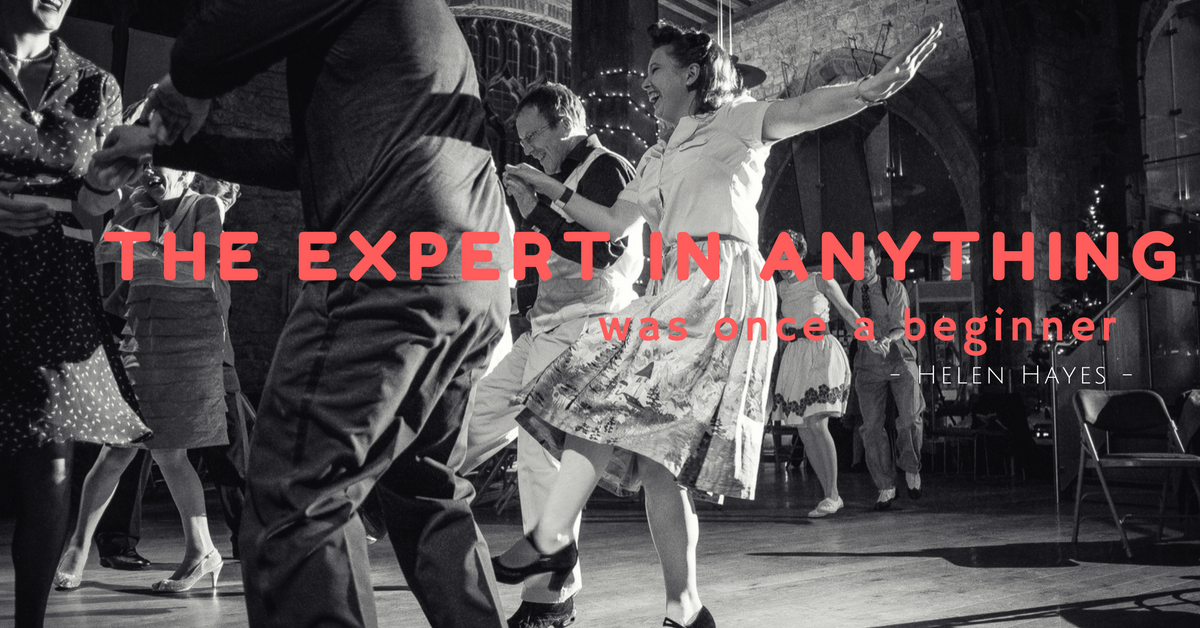
    The Expert In AnythingI’ve been working on something new and I can’t wait to tell you about it!

    It’s mainly for beginners but if you’re not a beginner, it’d be fantastic if you can help by sharing this with your friends who are new to dancing. So, what’s going on…..?

    Well, it’s been a busy summer with quite a few of you coming for one-to-one private lessons. Beginners want to have a sense of control so they don’t feel embarrassed when they attend their first class, whilst experienced dancers usually ask for a check up and tune up, where they can get feedback and make better progress. So, it’s great to teach so many private lessons. However, as my schedule is getting a bit crazy (in a busy & exciting way), I have decided to create Swing Dance Beginner, an online course so more dancers get the chance to build some brilliant basics.

    This course is perfect for beginners who may be concerned about feeling embarrassed when learning to dance ‘in public for the first time’. By learning online in the comfort of your own home, you can learn how to do the basic steps  and build your confidence before you join a class.

    If you are no longer a beginner but you want to build strong foundations in your swing dancing, or perhaps you’ve missed a few classes and need to catch up, this course will not only show you what the moves are but will teach you how to do them step by step.  You can also use the video lessons on this course to practise in between lessons and if you do this,  you will soon become a more confident swing dancer.

    Registrations will be opening on 12 September so check it out here and be among the first dancers to join this new course!

    Plus…….. If you Invite Your Friends to join the Swing Dance Beginner online course, you will receive £10 off any one of the Lindy Jazz courses.


    Happy dancing!