October, 2026

  1. How Can I Make Dancing Easier for Me?

    October 29, 2026 by Joo-Lee

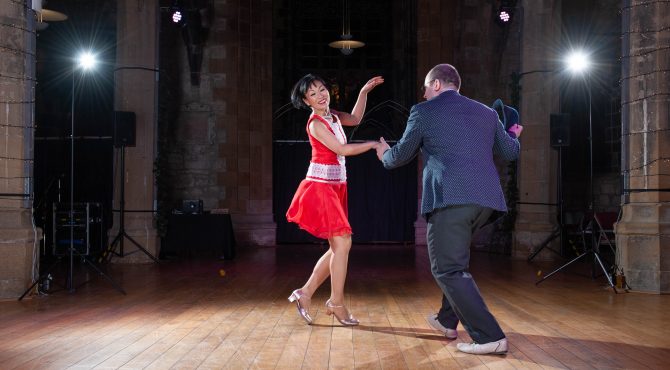
    Andy and Joo-Lee enjoying a Lindy Hop dance together at the Lindy Jazz Snow Ball, celebrating the joy of swing dancing and music.

    Whether you’re a complete beginner or have been dancing for years, there may be times when you find yourself wondering:

    “How can I make dancing easier for me?”

    Perhaps your feet aren’t doing what you want them to do. Perhaps you’ve forgotten something you learnt last week. Or perhaps you’re watching someone else dancing and wondering how they make it look so easy.

    If any of this sounds familiar, you’re certainly not alone!

    But rather than asking, “Why is it so hard to dance?”, try flipping the question:

    “What could I do to make dancing feel easier?”

    “What could I do to make dancing feel easier?”

    At Lindy Jazz, we believe in taking easy steps towards becoming a better dancer, rather than focusing on trying to be good. When you can do something easily, you will naturally do it better.

    Think about the things you’re already good at. You probably do them quite easily, don’t you? You don’t have to force every movement or concentrate intensely on every detail. You’ve practised enough that the skill feels familiar and natural.

    Dancing can become like that too.

    Let’s explore some simple ways to make dancing easier and more enjoyable.

    1. Are You Wearing the Right Shoes?

    Let’s start with something practical!

    Thick trainers, heavy shoes or shoes that grip the floor too much can make moving less easy than it needs to be.

    When your feet can’t move freely, turning and changing direction require more effort. Your knees and other joints may have to work harder too.

    You don’t need expensive dance shoes, but comfortable, lightweight footwear that allows you to move easily can make a surprising difference.

    The easier your feet can move, the easier it is to focus on enjoying the dance.

    2. Are You Trying Too Hard?

    This might sound strange, but trying harder doesn’t always make dancing easier.

    When you’re determined to get something right, you may unknowingly tense your shoulders, stiffen your knees, grip your partner’s hand or hold your breath.

    And when your body becomes tense, movement becomes less natural.

    Dancing becomes easier when your body is relaxed and able to move.

    Try doing a little less. Relax your joints, breathe normally and allow yourself to move naturally. You may find that the movement becomes clearer and more comfortable without extra effort.

    3. Are You Overthinking?

    One of the joys of dancing is moving to wonderful music.

    But sometimes our heads become so busy thinking about feet, hands, timing, direction and what comes next that we forget to enjoy ourselves!

    Of course, thinking is part of learning. But trying to think about everything at once can make simple movements feel less easy than they really are.

    At Lindy Jazz, we help you manage this by giving you one main thing to focus on at a time.

    You don’t have to think about everything. Just concentrate on the focus of that particular exercise or lesson.

    When one part becomes familiar, you can gradually add something else. Taking one easy step at a time helps your dancing develop naturally.

    4. Are You Comparing Yourself with Others?

    You might look across the room and think:

    “Why can’t I dance like that person?”

    But you don’t know their journey.

    Perhaps they’ve been dancing for ten years. Perhaps they have a background in music, sport or another form of dance. Perhaps they have more time to practise.

    And remember, we’re all physically different.

    Some of us are naturally more mobile. Some spend long hours sitting at desks. Others have aches, pains or physical limitations that affect how they move.

    Your dancing doesn’t need to look like anybody else’s.

    Instead of asking whether you’re as good as someone else, ask:

    “What would make this feel easier for me?”

    The important thing is to enjoy your own progress, at your own pace.

    5. Do You Know What You’re Supposed to Be Learning?

    Here’s something that can make an enormous difference.

    Imagine we’re teaching a particular footwork pattern or a way of connecting with your partner.

    The purpose of that exercise may be to develop your balance, timing, coordination or connection.

    But if you’re busy trying to memorise the entire sequence of moves, you may miss the very thing we’re helping you learn!

    At Lindy Jazz, we carefully plan your learning so that you have the right amount of material, with a manageable progression from week to week.

    There’s a reason why we focus on certain things and repeat them.

    The aim isn’t to collect as many moves as possible or to prove that you’re good. It’s to develop skills that gradually make dancing feel easier.

    And when something feels easier, you’ll naturally be able to do it better.

    6. Are You Expecting Yourself to Remember Everything?

    Think about everything else going on in your life.

    You may have a demanding job, family responsibilities, a busy social life or a hundred other things competing for your attention.

    Then you arrive at Lindy Jazz on Wednesday evening and expect yourself to remember every move from every previous lesson!

    That’s quite an expectation, isn’t it?

    Learning to dance isn’t a memory test.

    We revisit movements regularly because repetition helps them become easier and more familiar. You’re not expected to remember everything perfectly from one Wednesday to the next.

    So if you’ve forgotten something, simply enjoy being reminded.

    Each time you revisit a movement, you’re giving your body another opportunity to make it feel more natural.

    7. Are You Trying to Join Everything Together Too Soon?

    I love seeing you experiment with your dancing!

    Perhaps you’ve learnt one move this week and another three weeks ago. Naturally, you want to see whether you can put them together.

    That’s wonderful. Exploring and experimenting are part of the fun.

    But here’s where taking easy steps can help.

    Just because you can do two movements separately doesn’t mean you’ll automatically be able to connect them smoothly.

    Moving from one pattern to another is another skill in itself.

    So by all means, experiment, explore and have fun. Just allow yourself time to find an easy way to connect the movements.

    And if it doesn’t work straight away? That’s fine too!

    You can simplify the transition, try again or return to the individual movements. The aim is to find a way of dancing that feels comfortable and natural.

    8. Knowing How to Do Something Isn’t the Same as Being Able to Do It Easily

    This is a particularly important point.

    You might understand exactly how a movement works. You may even remember being taught it several weeks ago.

    But understanding a movement doesn’t necessarily mean your body can perform it easily yet.

    Knowing what to do and being able to do it comfortably are two different stages of learning.

    Your body needs opportunities to practise and repeat movements until they become more familiar and natural.

    That’s why we repeat things at Lindy Jazz.

    Sometimes you don’t need another explanation or another new move. You simply need more opportunities to practise what you already know, until it starts to feel easier.

    And once it feels easier, you’ll usually find that you do it better too.

    9. Are Experienced Dancers Necessarily Better Dancers?

    At Lindy Jazz, beginners and experienced dancers learn and dance together.

    And here’s something I would love everyone to understand:

    Being more experienced doesn’t necessarily mean being more naturally talented.

    Experienced dancers have often developed greater confidence, clarity and ease in their movements because they’ve repeated the same basic skills many more times.

    They may look good because the movements have become easier for them, not because they were always better dancers.

    Equally, being a beginner doesn’t mean you’re less capable.

    You may already have excellent rhythm, coordination or a natural feel for movement. What you haven’t had yet is the same amount of time to make your dancing feel familiar and easy.

    So let’s not be too concerned about labels such as beginner, intermediate or advanced.

    We’re all learning, and we all have something to work on.

    10. Are You Expecting Yourself to Dance Like a Performer?

    This is perhaps one of the biggest expectations we can let go of.

    We see wonderful dancers performing on stage or in videos. Their movements look effortless, beautifully coordinated and full of flair.

    It’s inspiring to watch.

    But remember, you’re coming to Lindy Jazz to enjoy social dancing, not to prepare for a performance.

    You don’t need to remember an impressive collection of moves. You don’t need to look polished. You don’t need to entertain anyone watching.

    You can have a wonderful dance using just a handful of simple movements.

    In fact, simple movements that feel easy and comfortable can often create the most enjoyable dances of all.

    11. What Are You Telling Yourself?

    Finally, listen to the words you use when you’re learning.

    If you repeatedly tell yourself:

    “This is so hard!”

    “I’ll never remember this!”

    “I’m rubbish at dancing!”

    You may begin to approach each new movement with tension and frustration before you’ve even started.

    What if you replaced those thoughts with:

    “What would make this easier for me?”

    “I can take one small step at a time.”

    “I don’t need to be good at this immediately.”

    “I’ll enjoy having another go.”

    “I’m getting more familiar with this each week.”

    You’re not pretending everything is already easy. You’re simply giving yourself permission to find an easier way to learn.

    And that can make a tremendous difference.

    So, Let’s Make Dancing Easier!

    Every Wednesday evening, Andy and I carefully manage your learning experience.

    We think about what to teach, how much to teach, when to revisit something and what we’d like you to focus on.

    We do this so that you can relax, enjoy the music and gradually develop your skills through manageable, easy steps.

    Of course, there will be moments when you need to practise or try something in a different way. That’s part of learning something new.

    But the goal isn’t to prove that you’re good at dancing.

    The goal is to find ways of moving that feel easier, more comfortable and more natural for you.

    When something feels easy, you can do it with less tension. When you can do it with less tension, you can focus more on the music and your partner. And when you’re relaxed and connected, your dancing will naturally become better.

    You don’t need to remember everything, master every movement or dance like somebody else.

    You don’t even need to improve every single week.

    You just need to come along, enjoy the music, enjoy the company and take one easy step at a time.

    And when something doesn’t quite work, perhaps have a little laugh, relax and try again.

    After all, Lindy Jazz isn’t about preparing you for a performance or turning you into a professional dancer.

    It’s about enjoying the music, developing your dancing skills, making friends and having a lovely Wednesday evening together.

    So next time you find yourself asking, “Why is it so hard to dance?” try flipping the question:

    “How can I make dancing easier for me?”

    Think about the things you’re already good at. You probably do them easily because you’ve had time to practise, become familiar with them and find a natural way to do them.

    Dancing can become like that too.

    You don’t have to focus on being good. Focus on taking easy steps, and the better dancing will follow naturally.

    Happy dancing!

    Joo-Lee & Andy
    Lindy Jazz

  2. Hopping Mad? 20 Years Ago, I Said YES!

    October 14, 2026 by Joo-Lee

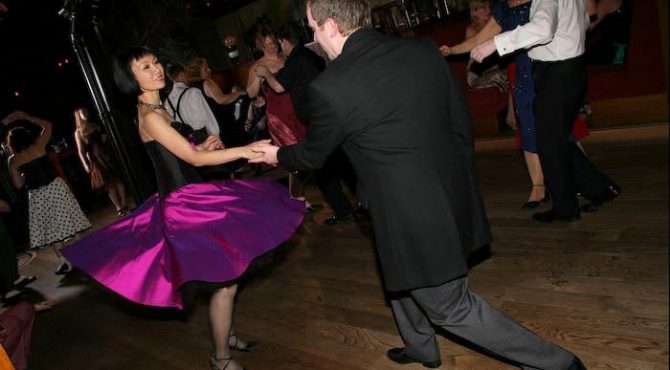
    Joo-Lee in a swirling purple dress, dancing Lindy Hop with a partner on a wooden dance floor.

    Sometimes, the biggest adventures begin with one decision.

    On 14 October 2006, I said YES!

    Not to a job offer. Not to someone else’s plans.

    I said YES… to ME!

    I made the big decision to hand in my notice, leave school teaching behind and take a leap into the unknown.

    After years of teaching music in schools, I wanted to follow my passion for music and dance and create something of my own.

    That something was Lindy Jazz.

    We Expected 20 People. 80 Turned Up!

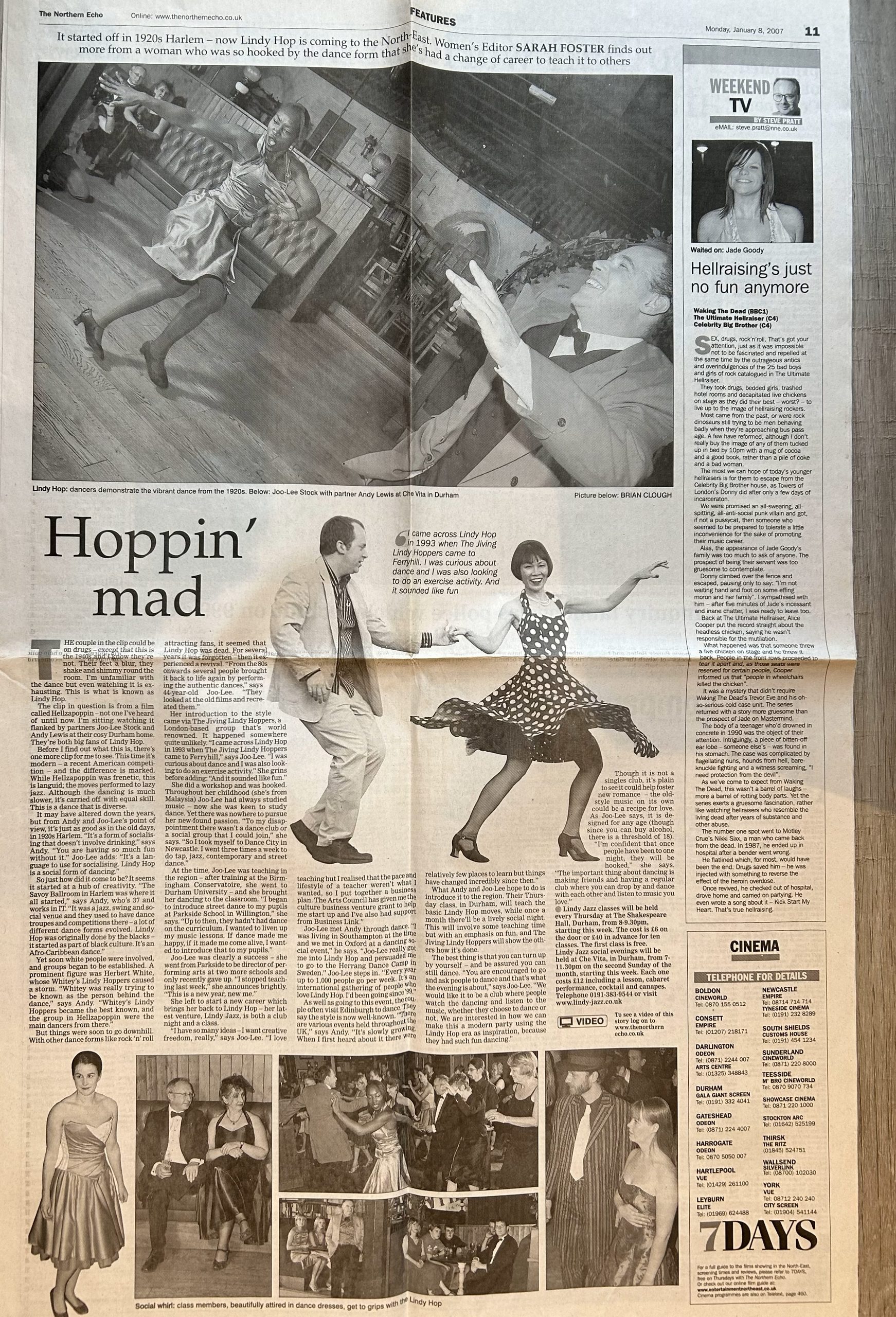
    To introduce our new Lindy Jazz venture, Andy and I organised a little ‘soft launch’ – a social dance with two wonderful Lindy Hop teachers, Russell Sargeant and Carolene Hinds.

    We thought perhaps 20 people might come along.

    80 people turned up!

    I was completely overwhelmed!

    In fact, we had to turn people away, including some who have since become very good friends.

    We certainly hadn’t expected that!

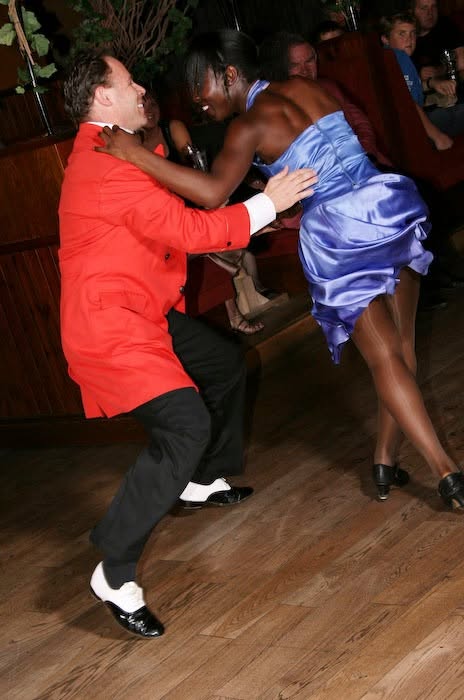
    Russell in a bright red jacket dancing Lindy Hop with Dolores in a flowing blue satin dress.
    Russell and Dolores bringing energy, joy and fabulous dancing to the Lindy Jazz dance

    You Don’t Know What You Don’t Know!

    Looking back, I smile at how little I knew about what lay ahead.

    I had enthusiasm, ideas and a passion for bringing people together through music and dance.

    But I had no idea what running my own venture would involve, what challenges I would face or where this adventure might take me.

    And perhaps that was a good thing!

    If I’d known everything that lay ahead, would I still have taken that leap?

    I’d like to think so.

    20 Years of Dancing, Laughter and Friendship

    That little event turned out to be the beginning of an extraordinary journey.

    Over the past twenty years, Lindy Jazz has brought so many people together. We’ve shared dance classes, social evenings, wonderful music, plenty of laughter and friendships that have lasted for years.

    Some people came to learn a few dance steps and discovered a whole new social circle.

    Others came along feeling nervous and unsure, only to discover the joy of giving something new a go.

    And along the way, I’ve learned an enormous amount too – not just about dancing or running a business, but about people, friendship, resilience and myself.

    I’m So Glad I Said YES!

    Looking back, I’m incredibly glad I made that decision twenty years ago.

    Not because everything has always been easy. It certainly hasn’t!

    But because of the wonderful people I’ve met, the experiences I’ve enjoyed and the friendships that have grown along the way.

    I’m especially grateful to everyone who has supported, encouraged and believed in Lindy Jazz, whether you joined us right at the beginning or have only recently discovered us.

    You’ve all been part of this journey, and I couldn’t have done it without you.

    As we begin celebrating twenty years of Lindy Jazz, I’d love to hear from you.

    When did you first discover Lindy Jazz? What is your favourite memory?

    Perhaps you were there in those early days. Perhaps you’ve only just joined us.

    Either way, I’d love you to share your memories in the comments.

    Here’s to twenty years of music, dancing, laughter and friendship – and to saying YES to the things that bring us joy!

    Joo-Lee


  3. How to Be a Better Follower in Lindy Hop: Stop Trying to Get It Right

    October 5, 2026 by Joo-Lee

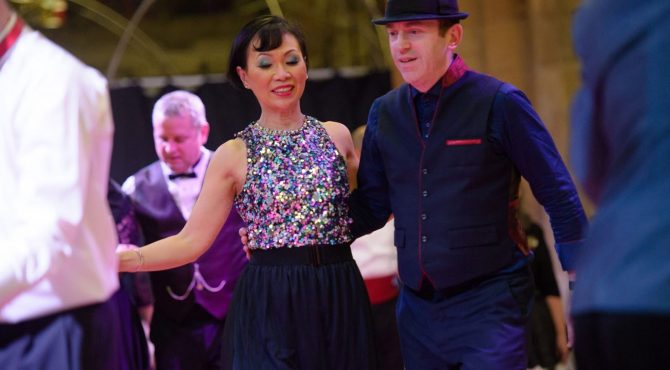
    Joo-Lee dancing with Andy at the Lindy Jazz Snow Ball. She is wearing a red dress and is smiling.

    One of the questions we’re often asked at Lindy Jazz is:

    “How can I become a better follower?”

    Followers also ask things like:

    “Which way am I turning?”
    “What am I supposed to do next?”
    “Am I doing it right?”

    And sometimes, I deliberately don’t answer those questions directly.

    That might sound strange. Surely, as your teacher, I should tell you which way to turn?

    But there’s a reason I don’t always do that.

    Did You Follow It – Or Did You Remember It?

    I’ve been teaching Lindy Hop for more than twenty years, and I’m also a follower myself.

    One of the most important things I’ve learned is that good following isn’t about knowing what is going to happen next.

    In fact, quite the opposite.

    If I tell you, “You’re going to turn to the right now,” you may successfully make the turn. But you haven’t necessarily followed it.

    You knew it was coming. You remembered it. You performed it.

    That’s useful when we’re learning choreography, but social Lindy Hop is different. Much of what happens on the social dance floor isn’t planned in advance.

    As a follower, you’re developing the ability to listen, feel, interpret and respond.

    Are You Dancing in Your Head?

    When we teach something new in class, there are naturally lots of visual cues. You watch us demonstrate a movement. You might watch a practice video at home. You may even find yourself copying the person next to you.

    That can all be useful while you’re learning.

    But ultimately, I want to help you develop another skill:

    Dancing through feeling.

    If your mind is constantly asking, What comes next? Which foot? Which direction? Is this right? then you’re dancing in your head.

    And thinking takes time.

    When you begin to trust what you feel instead, your dancing can become much more spontaneous and enjoyable.

    You don’t have to know what comes next.

    Not knowing is part of the dance.

    Is a Lead an Instruction – Or an Invitation?

    Followers sometimes come to me after dancing with someone and say:

    “S/He guided me really well.”

    But I sometimes wonder whether guided is quite the word we want.

    Personally, as an experienced follower, I don’t particularly want to be guided around the dance floor.

    If a lead becomes too physical, I can experience it as a little shove: You need to go over there now.

    That isn’t how I like to think about leading and following.

    For me, a lead is much more like an invitation.

    The leader creates an invitation towards a direction, shape or movement. The follower feels it, interprets it and responds.

    An invitation still leaves room for choice.

    There is structure in Lindy Hop, of course. We are dancing together, after all. But within that structure, there can be a wonderful amount of freedom.

    Your Leader Isn’t in Charge of Your Dancing

    Sometimes, as followers, we can unconsciously hand over far too much responsibility to the leader.

    We assume the leader knows exactly what they’re doing. They’ll decide what happens. They’ll make the dance work. They’ll do their own dancing and somehow guide us into exactly the right place at the same time.

    But think about how much responsibility that puts on one person.

    A beginner leader may be just as nervous as you are. They’re thinking about their own footwork, timing, the music, where they are on the dance floor and how to communicate with you.

    They don’t suddenly know everything simply because they happen to be leading.

    And an experienced leader doesn’t necessarily want to be responsible for your entire dance either. They may have much more fun if you can relax, listen and bring some of yourself to the partnership.

    The leader dances their part.

    You dance yours.

    And somewhere between the two, you create a dance together.

    Are You Trying Too Hard to Please?

    If you’re constantly trying to work out what your leader wants so that you can “get it right”, something interesting starts to happen.

    You begin to anticipate.

    You recognise a familiar movement and think:

    Oh, I know this one!

    And off you go.

    But your leader may not actually have led it yet.

    Trying very hard to be a “good follower” can sometimes get in the way of actually following.

    Your job isn’t to prove that you know the moves. And it isn’t to please your leader by always arriving in exactly the position you think they expect.

    You have a part in this dance too.

    Are You Still Following Like a Beginner?

    When you first start dancing, it’s completely understandable to feel nervous.

    You may want to know exactly where you’re going, whether you’re doing the right step and whether you’re giving your leader what they expect.

    And your leader can feel that nervousness too.

    If you appear unsure or worried about getting something wrong, your leader may naturally respond by trying to look after you. They may make the lead stronger, guide you more physically or try to make absolutely certain that you arrive in a particular place.

    In other words, the more you ask to be looked after through your dancing, the more your partner may feel they need to look after you.

    That can be reassuring when you’re a beginner.

    But if you’ve been dancing for a while, it might be worth asking yourself:

    Do I still need that?

    Perhaps some of the habits that made you feel safe as a beginner are now limiting the dancer you could become.

    What Happens If You Trust Yourself?

    As you gain experience, you can begin to let go of the need to get everything right.

    Listen to the invitation.

    Respond to what you actually feel.

    Allow yourself to explore what happens next.

    And remember, you don’t have to wait for your leader to move you! You can already be moving to the music, even with a gentle bounce or weight shift. If both feet are firmly planted on the floor, your leader has a much harder job and may feel the need to nudge or guide you. When you’re already moving, it’s much easier for your leader to invite you in a particular direction. Don’t worry too much about going the wrong way – an experienced leader can help redirect your movement.

    That doesn’t mean deliberately ignoring your partner or doing something completely different from what they’re suggesting.

    It means becoming less timid about your own part in the dance.

    You don’t need your leader to dance their dance and yours.

    I Don’t Follow Everyone in the Same Way

    I don’t follow in exactly the same way with every person.

    How I follow depends on my mood, the music and my partner.

    If I’m dancing with a nervous or less experienced leader, I’m unlikely to be particularly flamboyant or dynamic. I don’t want my dancing to make them feel that something has gone wrong or that they’ve somehow lost me.

    I’ll usually keep things simpler so that we can both relax and enjoy the dance.

    But if I’m dancing with an experienced dancer who is relaxed, clearly enjoying the music and comfortable with our connection, I might become much more spontaneous and playful.

    I can interpret, improvise, respond to the music and enjoy the little surprises that happen between us.

    And on another day, with another person and another piece of music, I might dance completely differently again.

    Could Versatility Bring You More Joy?

    For me, that versatility is part of the joy of Lindy Hop.

    Following doesn’t have to become another routine.

    If we always dance with the same mindset — always cautious, always trying to be correct, always trying to please our partner — our dancing can begin to feel predictable.

    As our confidence grows, we can give ourselves permission to explore.

    So, What Kind of Follower Are You?

    There is no single right or wrong way to follow.

    What I’ve described here is my preference as a follower, and even my preference changes according to my mood, the music and the person in front of me.

    Do you like the security of knowing that you’re doing what your leader expects?

    Do you enjoy the reassurance of feeling that you’ve done something “correctly”?

    Or do you prefer more freedom — interpreting, improvising and being playful?

    Perhaps you enjoy all of these things at different times.

    And if you’ve been dancing for a while, perhaps there’s another question worth asking yourself:

    Am I still trying to be the “good beginner” who gets everything right — or am I ready to explore what kind of follower I want to become?

    What makes following feel most joyful to you? Has that changed as you’ve become a more experienced dancer?

    Tell us in the comments. I’d love to hear how you experience following.